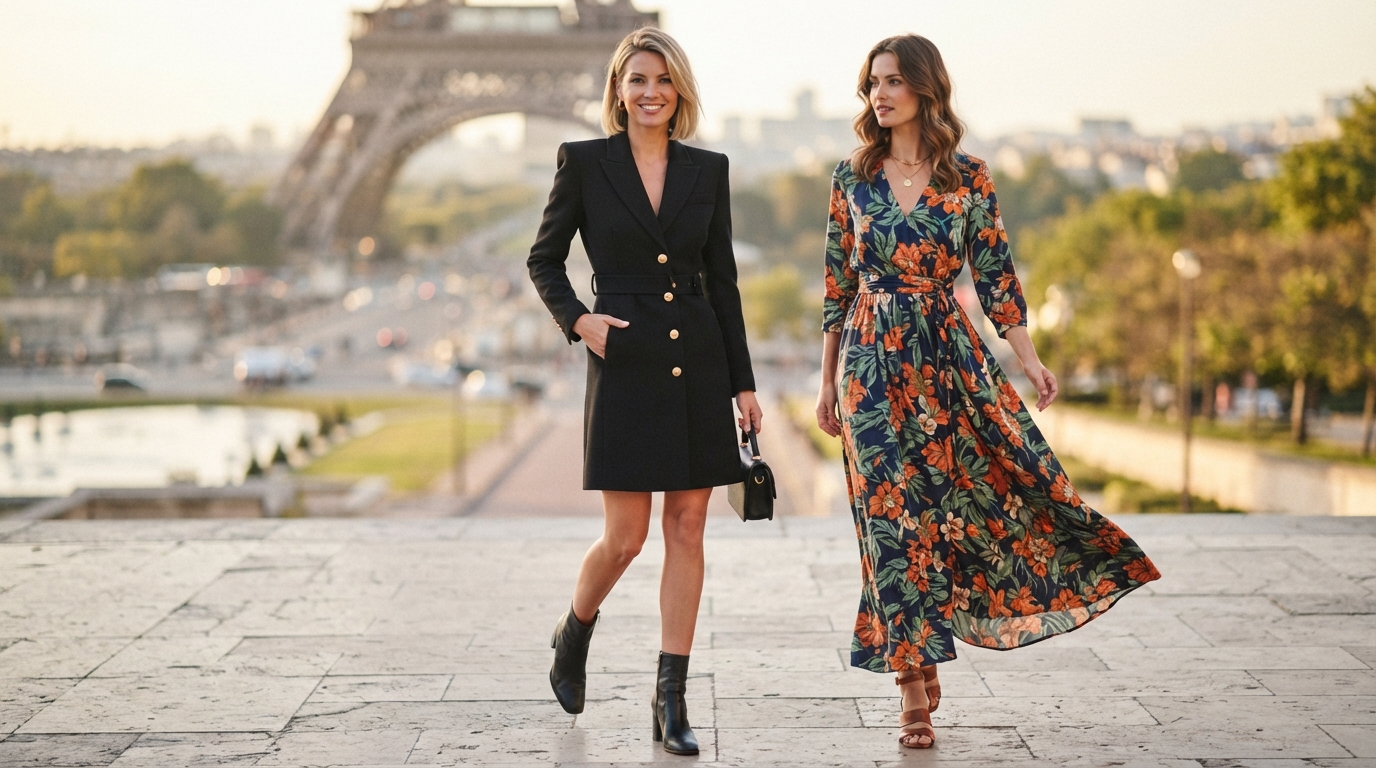
Two outfits can use similar clothes and still create very different impressions because their shapes, lengths, and focal points relate differently. Fashion proportion and balance can shift a look without changing the clothes or asking our bodies to change. A tucked shirt, an open jacket, or one bright detail may give familiar pieces a new feel.
We can use these choices for work, weekends, and special events. The aim is not to follow a perfect formula; it is to see what feels right and looks intentional. Small adjustments can help us wear more of what we already own. We can test those relationships with the clothes we already own before deciding that an outfit needs replacing.
Key Takeaways
- Compare each detail with the whole outfit, not by itself.
- Use visual weight to notice where the eye goes first.
- Try a ratio as a styling option, not a dress rule.
- Adjust one detail at a time, such as a tuck or layer.
- Choose fit and movement that feel comfortable throughout the day.
What Are the Elements and Principles of Fashion Design?
A garment’s design starts with elements we can see or feel and principles that organize how those elements work together. Visual weight is the perceived heaviness of an outfit element that influences where the eye goes. Elements are the parts; principles describe how those parts relate.
Common elements include shape and form, line, color, and texture. Some design frameworks also name silhouette and pattern as elements. The Museum at FIT offers an educational resource on fashion design for students exploring these ideas.
| Principle | What it organizes | Clothing example | Visual effect |
|---|---|---|---|
| Proportion and scale | Part sizes and whole design | Wide collar on a long coat | Details feel related to the garment |
| Balance | Visual weight across a design | Matching pockets on a jacket | Even or intentionally varied focus |
| Unity | How parts fit together | Repeated fabric and trim | A connected look |
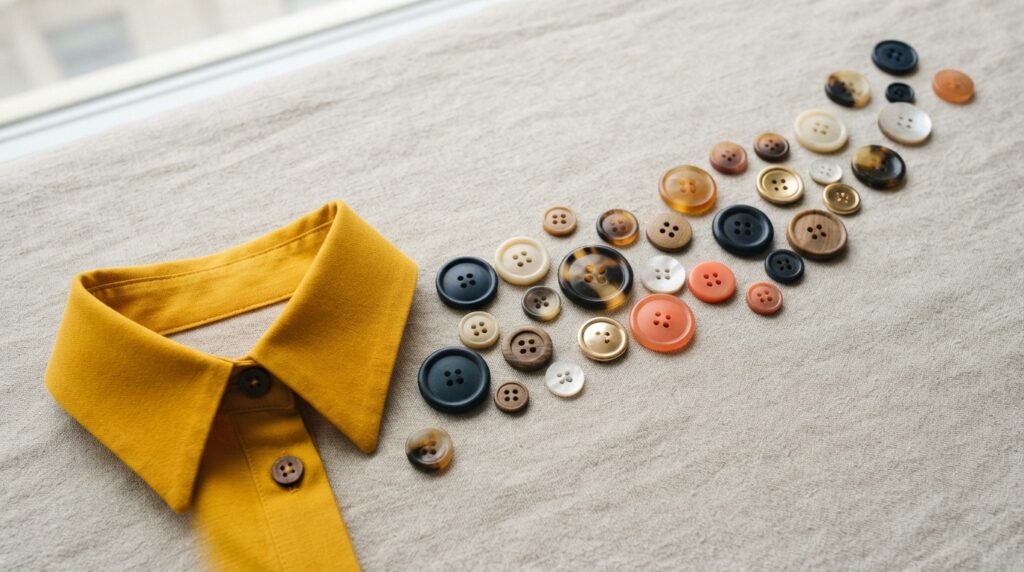
| Rhythm | Repeated details or patterns | A row of buttons | The eye moves along the garment |
| Emphasis | The strongest point of attention | A bright collar | One detail stands out |
When an outfit feels unresolved, identify the element that draws attention first. That clue can show which design principle needs adjusting.
Design frameworks group some terms differently. One may treat pattern as an element, while another may focus on scale or movement. These names help us describe a design, not rank its quality. A shirt can use a strong line and color contrast while still feeling calm.
When an outfit feels unresolved, identifying the element that draws attention can tell us which design principle needs adjusting.
How Do Fashion Proportion and Balance Work Together?
A sleeve can look well designed by itself and still feel out of place if its scale overwhelms the rest of the outfit. Proportion means the relationship between parts of a design, while balance helps those parts share visual weight. Judge each piece against the full look, not in isolation.
That check includes the garment, the wearer, and the other clothes around it. A striking difference can add interest when the full silhouette still feels connected.
Compare each part with the whole outfit
Look at sleeves, collars, pockets, buttons, and other details beside the garment’s full shape. An oversized sleeve may take over a simple dress, while a tiny pocket can seem lost on a large coat. Neither size is automatically wrong; the relationship is what matters.
A collar that repeats the width of a lapel may feel planned. A pocket with a similar scale to nearby buttons can also help a design feel steady. We can step back and see whether each detail supports the garment’s main shape.
Relate clothing to the wearer’s body
Garment lengths and widths also relate to the wearer, but no body needs correction. A long jacket can create a different impression from a short one, and a roomy sleeve feels different from a close fit.
We can consider where clothes rest and how much of the body they cover. That choice is personal, not a measure of whether our proportions are right. A design can suit one person’s preferred look and feel less like another’s.
Use contrast without letting one piece dominate
Unequal parts can create visual harmony when one strong detail has enough support. For example, an oversized sleeve can work with a simple neckline and clean skirt shape. An undersized pocket may also read as a deliberate accent when repeated elsewhere.
The contrast should look connected to the garment’s design rather than accidental. Judge a detail from a few steps away, where its relationship to the complete silhouette is easier to see.
What Does Visual Balance Look Like in an Outfit?
A centered button placket and matching pockets create a different kind of balance from a one-sided neckline detail. Symmetrical balance repeats matching elements, while asymmetrical balance pairs different elements with similar visual impact. Balance depends on how the eye reads the whole garment.
Neither approach is more stylish by default. A repeated shape can feel orderly, while uneven placement can make an outfit feel lively.
Symmetrical balance
Matching pockets on either side of a jacket offer a clear example of symmetrical balance. Evenly repeated buttons or mirrored trim can create the same effect. The matching details give the eye a steady path across the garment.
Asymmetrical balance
A one-sided neckline detail can be offset by a stronger color, texture, or shape elsewhere. The parts do not match, yet their visual weight can feel even. A dark shoulder panel, for instance, might pair with a bright cuff on the other side.
| Balance type | Placement | Clothing example | Effect |
|---|---|---|---|
| Symmetrical balance | Matching sides | Two equal jacket pockets | Orderly and steady |
| Asymmetrical balance | Unequal sides, similar impact | One-sided neckline detail with a strong opposite cuff | Active, but still composed |
| Mixed outfit example | Matching base, uneven accent | Centered shirt with one bright shoulder bag | Stable with a clear point of interest |
We can mix both types within one outfit. A centered shirt may create a calm base for an uneven jacket closure or a single bold detail. An asymmetrical outfit can still feel balanced when its visual weight is answered elsewhere in the look.
How Can the Rule of Thirds Shape an Outfit?
A tucked top with high-waisted trousers creates a simple starting point for a shorter upper section and a longer lower section. A practical rule of thirds uses about one-third for the top and two-thirds for the bottom. Treat the ratio as a guide, not a requirement.
The top often ends near the natural waist, roughly level with the belly button. That division can make the lower section appear longer, though a near-even split may be a deliberate choice. The golden ratio is separate, at about 1:1.618, and serves as a general design guideline rather than a body measurement.
Build a one-third top and two-thirds bottom division
A tucked shirt and high-waisted trousers make the division easy to see. A long skirt can create a similar effect. We can test the same idea with pieces already in a closet, without buying a special cut.
Treat the golden ratio as a flexible guide
The golden ratio can help us compare design parts, but it does not set a correct length for anyone’s torso or legs. A balanced result can use many divisions, depending on the clothes and the look we want.
- Tuck a shirt into high-waisted trousers or a long skirt.
- Try a cropped layer over a longer base piece.
- Add a belt that marks the waist without pinching.
Some outfits look better with a clear half-and-half split, especially when that division supports a chosen style. Use the ratio as a fitting-room experiment, then keep the division that feels intentional and comfortable.
How Do Silhouette and Lines Change Visual Proportions?
A vertical seam and a horizontal band can make the same garment read as two different shapes. A silhouette is a garment’s overall outline when viewed from a distance. Line direction changes the garment’s visual effect, not the body itself.
Seams, openings, pleats, gathers, tucks, topstitching, and trim can all form lines. A straight line often feels crisp, while a curved seam can suggest a softer, more fluid shape.
A vertical seam may add length to the garment’s appearance. A horizontal band can draw attention across one area and may make that part appear wider. The effect depends on where the detail sits and what surrounds it.
Utah’s Fashion Design Studio standards include line, silhouette, color, texture, and pattern among design elements. Those terms help us describe what a seam or trim does in a design.
A row of buttons can guide the eye down a shirt, while gathers may create a wider, softer outline. Curved seams can break up a boxy shape without changing how the garment fits. These are visual choices, not ways to change a body.
Check the outline from a distance before deciding whether a close-up detail is changing the overall effect.
How Should We Balance Volume Between Tops and Bottoms?
A loose shirt over wide-leg pants can hide the outfit’s shape, while a tuck or slimmer bottom gives the eye a clearer point of definition. Pairing roomy clothes with simpler shapes is one option, not a rule.
A fitted top can balance a full skirt or wide-leg trousers. Still, two voluminous pieces can work when their cut and styling look deliberate. A long, roomy shirt and wide pants may form a clean column rather than a pile of fabric.
| Top shape | Bottom shape | Suggested adjustment | Visual effect |
|---|---|---|---|
| Oversized shirt | Wide-leg pants | Tuck, belt, shorten, or choose slimmer pants | More definition around the middle |
| Fitted top | Full skirt | Keep the top simple | Clear contrast in shape |
| Boxy top | Slim bottoms | Leave the top loose or add a small tuck | Room above, cleaner line below |
Tucking can reveal a waistband, while a belt can give a loose shirt a clear point of shape. Shortening a roomy top may also help when the bottom is wide. Each choice changes the outline without making one cut the only correct choice.
When both halves are roomy, a long matching line can make the combination feel planned. A defined waist or a clean opening can also give the eye a place to rest. When both halves are roomy, look for a clear waist, a clean line, or another deliberate detail to keep the volume from feeling accidental.
Where Should Waistlines, Hems, and Layers Fall?
A cropped jacket can make the waistline more noticeable, while a longer layer creates a different vertical frame around the base outfit. A tucked top shows more of the waistband, while a long top gives extra coverage. Choose a hem based on the look and coverage we want.
An open long layer can sit over a balanced base, even for petite wearers, when the clothes underneath remain visible. A small break at a wrist or ankle can also help control the impression of volume.
Angled fronts and shirttail hems can soften a strong horizontal break around the hips. A jacket with an angled edge, for example, can feel less abrupt than a straight band across the same area. The choice may also depend on how much coverage feels comfortable.
A long outer layer does not have to hide the outfit beneath it. Leaving it open can show the shirt and pants or skirt as a separate base. A closed layer creates a different shape and may suit a cooler day or a more covered look.
- Try an angled front to soften a straight edge.
- Choose a shirttail hem for a curved finish.
- Roll a cuff to reveal a wrist or ankle.
Length can affect how easy a garment feels during the day. A long sleeve may suit a cool office, while a shorter cuff may work better for cooking or writing. Before leaving home, check whether the hem lands where you intend it to draw attention.
How Can Details Guide the Eye Through an Outfit?
A bright collar can become the first place the eye lands, while repeated buttons can carry attention down the front of a garment. The first detail that attracts attention is the focal point. Choose a focal point that fits the impression we want.
Repeated stripes or buttons create rhythm by leading the eye through a design. Converging seams can point toward a meeting place, while grouped details can gather attention in one area. A single clear path helps a busy garment feel easier to read.
Color also changes attention through hue, value, and intensity. A red collar has a different hue from a blue shirt; a pale collar has a higher value than a dark one. A vivid red usually has stronger intensity than a muted red.
We can use a contrast in shape, detail, or color to create emphasis. The focal point might be a collar, a belt buckle, or a single patterned panel. The rest of the outfit can stay quieter when one detail already stands out.
- Identify the detail we want noticed at first glance.
- Check whether repeated details lead the eye onward.
- Remove one accent if it competes with the focal point.
When several prints or details already call for attention, another bright accent may split the focus. Keep one clear focal point when a look already contains several strong patterns or details.
Which Color Combinations Create a Balanced Look?
A complementary pair such as orange and blue creates stronger contrast than neighboring colors such as red and orange. Choose a restrained palette when one garment should stand out.
A monochromatic outfit can create an unbroken vertical line through different shades of one color. More contrast can make an outfit feel lively, especially when the pieces share one repeated detail.
| Palette | How colors relate | Named example | Visual effect |
|---|---|---|---|
| Complementary | Opposite on the color wheel | Red and green | Strong contrast |
| Analogous | Next to each other | Red and orange | Close, connected color |
| Monochromatic | Shades of one color | Light blue and navy | One flowing color story |
| Triadic | Three points equally spaced | Red, yellow, and blue | Several clear color accents |
Complementary colors sit opposite each other on the color wheel, such as orange and blue. Analogous colors sit next to one another, such as blue, green, and purple. Monochromatic dressing uses shades within one color, while a triadic palette pairs three equally spaced colors.
A bright skirt may stand out best with a quiet shirt and jacket. A more dynamic outfit can use stronger contrasts, especially when the shapes remain simple. If a high-contrast outfit feels divided, repeat one color in a second garment detail to connect the pieces.
How Do Fabric Texture and Detail Scale Affect Balance?
A crisp, structured fabric holds a different outline from a soft fabric that moves with the body. Texture is the surface interest we see or feel in fabric. Texture and structure both affect an outfit’s visual weight.
A structured skirt can anchor a fluid top, while a textured knit can stand out beside smooth trousers. Neither surface needs a matching partner; the contrast can make the pieces easier to notice.
Fabric structure changes how a garment holds its shape. A firm jacket may keep a sharp edge, while a fluid blouse tends to drape and move. That difference can add variety even when both pieces share a color.
Details also need to relate to the garment around them. A wide collar may feel prominent on a small shirt, while a tiny button can disappear on a heavy coat. Sleeves, pockets, prints, and buttons can all look too large or too small beside the full design.
A textured knit with smooth trousers offers a clear contrast without adding another color. A textured skirt with a patterned blouse may feel busier because both surfaces compete. These are styling choices, not rules tied to body size.
When an outfit feels visually busy, simplify either the surface texture or the number of prominent details.
How Can Accessories and Shoes Complete an Outfit?
A bag can become the outfit’s strongest visual element when its size and shape contrast sharply with the rest of the look. A medium structured bag may feel more in scale on a petite frame than an oversized tote. Accessories work best when their visual weight suits the rest of the outfit.
A pointed flat can extend the apparent leg line, while an ankle-crossing strap can interrupt it. These are options, not rules for petite wearers or any other body type.
Jewelry can echo a neckline, sleeve, or garment texture without copying every detail. A simple chain may suit a clean neckline, while a textured cuff can pick up a knit’s surface. Choose one element to repeat so the pieces feel related.
A large tote beside a fine sweater and jeans may draw attention first. A medium structured bag can feel quieter while still giving the outfit a clear shape. The best choice depends on whether we want the bag to lead or support the look.
Pointed flats can create a different impression from rounded shoes, and ankle straps add a visible break. Neither choice is required; comfort, occasion, and personal style matter too. Choose the accessory you want noticed first, then keep competing pieces quieter.
How Can We Adapt Proportion Principles to Different Bodies?
The same outfit formula can feel different on different bodies, so begin with the effect and comfort we want rather than a category label. Use styling choices to express preference, not to fix a body.
Our bodies vary in height, bust, waist, hips, and shape. Those differences do not set limits on what clothes we can wear. Personal choice matters more than a chart’s fixed advice.
Work with the proportions you want to emphasize
A neckline can draw attention toward the face, while a waist detail can highlight that part of an outfit. More volume on the lower half can change the look without making it more or less correct. We can pick the emphasis that feels like our style.
A wide neckline, a quiet waist, or a full skirt can each become a chosen feature. The point is not to hide another area. It is to decide what we want the outfit to show first.
Choose fit for comfort and movement
Ease and range of motion matter as much as the mirror view. A jacket may look sharp but feel tight when we reach forward. Pants may sit well while standing but restrict movement when we sit.
We can check how a garment rests on the shoulders, waist, and hips as we move. If the fabric pulls or shifts in a way that distracts us, a different fit may feel better. Comfort is part of a useful outfit, not an afterthought.
Use styling preferences, not body-type rules
Rigid advice based on bust, waist, hips, or height can turn a styling choice into a limit. Experiments let us find what feels right instead. A petite wearer can choose a long layer, and a taller wearer can choose a cropped top.
Ask three simple questions before settling on a look:
- What feels comfortable?
- What do I want to emphasize?
- Does the outfit move as I need it to?
Keep a styling choice when it feels like you, not because a body-type chart says it should.
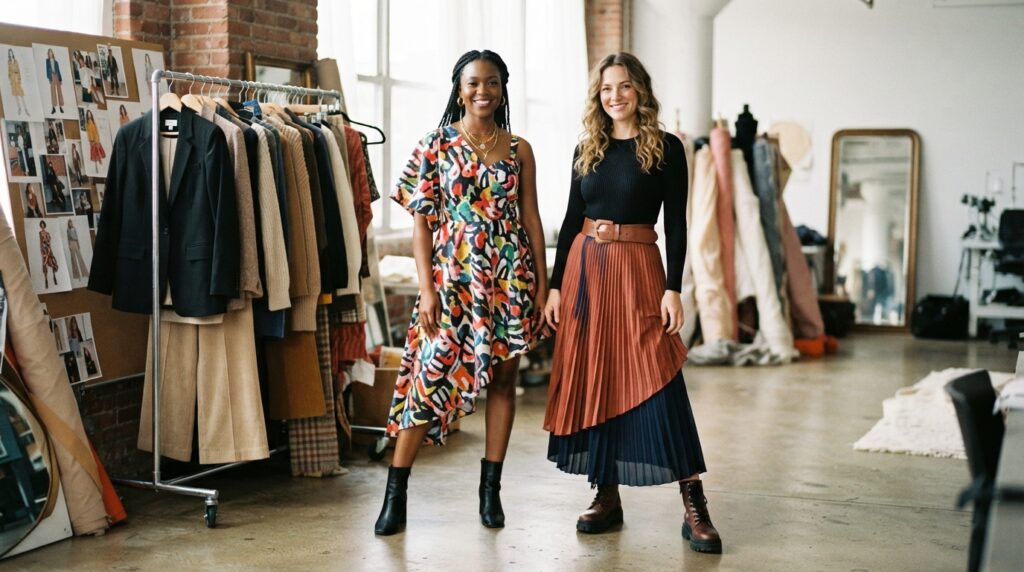
How Do Fit and Measurements Affect Proportion?
A size label cannot tell us how a garment will sit on every body, so accurate measurements provide a more useful starting point. Size charts are general references, and sizes can vary between brands.
Measure over the body, not over bulky clothes, and keep the tape level. A careful measure can help us compare a body with a chart, but it cannot guarantee the same fit in every cut.
| Measurement | Where to measure | Setup | Practical check |
|---|---|---|---|
| Bust or chest | Fullest part | Tape parallel to floor | Keep tape level and snug |
| Hips | Fullest part, over buttocks | Feet together | Do not pull tape tight |
| Inseam | Crotch to inside leg seam | Use well-fitting pants | Check length with shoes |
Measure the bust or chest around its fullest part with the tape parallel to the floor. Measure hips around their fullest part, including over the buttocks, with feet together. For inseam, follow the inside leg seam from the crotch on well-fitting pants.
Record measurements to the nearest half inch. Check pant length with the shoes you expect to wear, since footwear can change where the hem rests. Fit and outfit proportion differ: a garment may fit well but still create a look we do not prefer.
Try the garment on with the shoes and layers you expect to wear before deciding whether its length works.
How Can We Use 2026 Trends Without Losing Balance?
A billowy trouser or a dramatic hem can make a 2026 trend the outfit’s main feature, so let the rest of the look support that choice. Fall-winter designs include oversized and cropped styles, cocoon-like tailoring, dramatic hems, and billowy pants and dresses. Try one statement shape before adding another.
Spring 2026 skirts include flowing maxis and structured midis. A simple top can ground a statement skirt, while relaxed wide-leg jeans and structured straight cuts offer different denim shapes.
A Destree jacquard blouse pairs voluminous shoulders with a fitted waist, showing how one design can balance volume with definition. The blouse makes a strong feature without requiring the rest of the outfit to compete.
Matching sets are two-piece outfits that can be worn together or mixed with other clothes. Wearing both pieces creates a connected look, while separating them gives each one a new role. A statement skirt can also work with a familiar shirt or sweater.
We do not need to replace a closet to try a trend. A cropped jacket can sit over jeans we already wear, or a wide-leg pair can replace a familiar straight cut for one day. Try the trend with one piece you already own before building a full outfit around it.
What Do Balanced Outfit Examples Look Like?
Fashion proportion and balance examples include a loose shirt tucked into wide-leg pants and a fitted top paired with a full skirt. These combinations change where attention falls or how visual weight spreads. Use the examples as starting points, then adjust them to suit your clothes.
An open long layer can frame a balanced base, while a monochromatic outfit can give a focal accessory more notice. Small changes can shift the whole look without replacing every piece.
- Loose shirt tucked into wide-leg pants.
- Fitted top with a full skirt.
- Open long layer over a balanced base.
- Monochromatic outfit with a focal accessory.
In a dressing room, we can check the outfit from a few steps back, then move and sit. A mirror view shows the outline, while movement shows whether the pieces feel easy to wear.
- View the whole silhouette from a distance.
- Identify the first focal point.
- Check that the clothes allow comfortable movement.
Keep the combination that feels balanced from the front, side, and back. A useful outfit should still feel right when we move.
Conclusion
A balanced outfit does not depend on a perfect ratio, but on how its pieces work together and feel to wear. Visual balance is a flexible styling choice, not a rule for changing anyone’s body. We can make a familiar outfit feel new by changing one detail.
Choose a familiar look and adjust just one element, such as the top length, an outer layer, or the focal detail. Try one small change in front of a full-length mirror and keep the version that feels most like you.