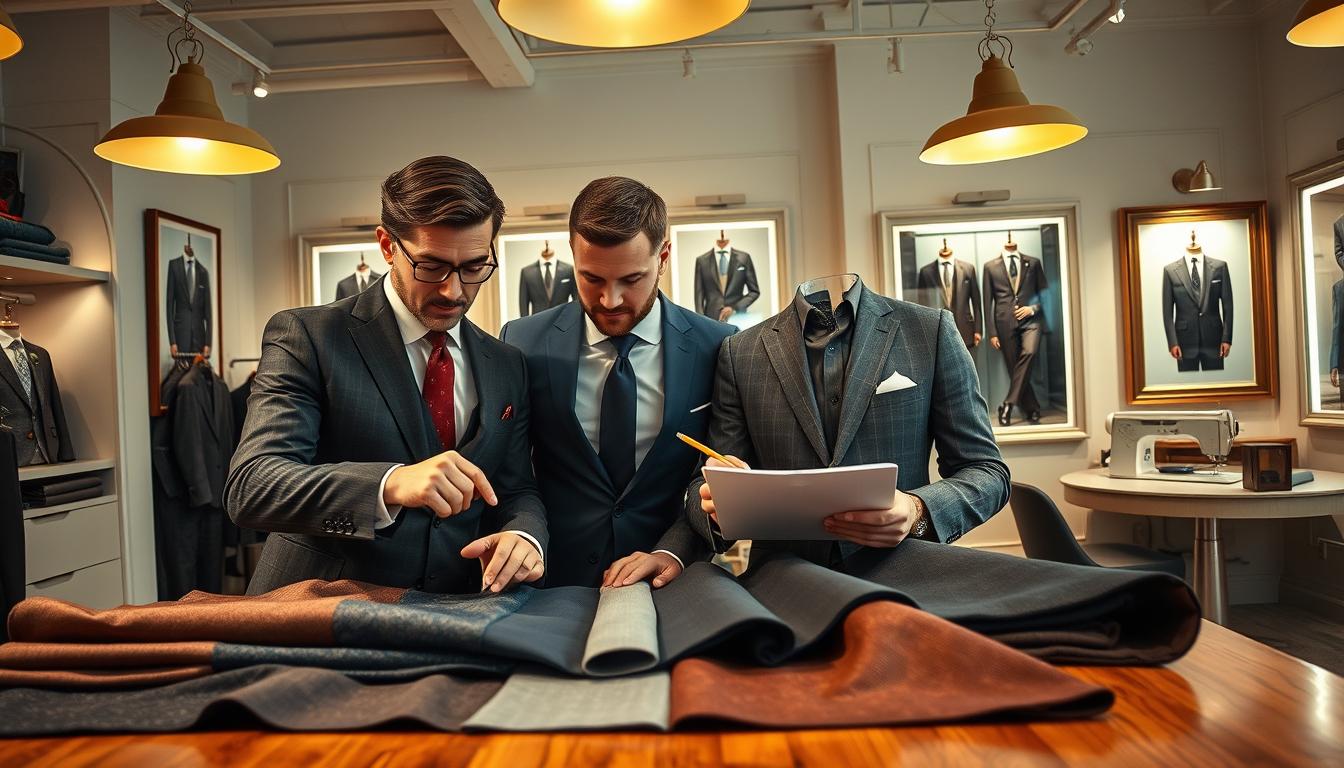
A well-fitting suit starts with the occasion you need it for and the way you want it to look. Custom tailored suits for men can take 3-5 weeks when you add a personalized lining. We help men compare styles, fabrics, and ordering options for work, weddings, and other formal events. The right size and fit should feel comfortable when you sit, move, and stand. We can also help you weigh local appointments against online ordering. Start with the event date and the setting, since both shape the style and ordering choices that will work for you.
Key Takeaways
- Choose a suit for the event and setting.
- Compare fit, fabric, and order support.
- Check delivery timing for fixed event dates.
- Review the fit guarantee before ordering.
- Choose details that suit your personal style.
How Much Do Custom Tailored Suits for Men Cost?
In 2026, made-to-measure suits generally fall between $400 and $2,500, while bespoke starts at $3,000 and can exceed $6,500. Lower-cost custom options sit near the bottom of the made-to-measure range, while bespoke prices reflect a more individual process. Compare the work and services included, not just the number on the tag.
Made-to-measure suits generally cost $400-$2,500 in 2026, while bespoke suits start at $3,000 and can exceed $6,500.
Made-to-measure and bespoke price ranges
Made-to-measure means a suit adjusted from a pre-existing pattern using the customer’s measurements. In 2026, true bespoke suits cost $3,000-$6,500 or more.
In New York, a real bespoke suit often starts around $3,500 and can reach $6,000 or more in 2026. Those local prices are not a national average.
For one named seller’s example, Hockerty’s listed starting price is $349, and its page displays 19,235 reviews. That listing is not a market-wide price or a recommendation.
Shoppers looking for custom tailored suits for men at a lower price should compare options near the low end of made-to-measure. The final bill depends on fabric, construction, and the tailoring process.
Specific retailers can list prices above these general ranges. GQ’s suit price guide gives examples from The Armoury and Huntsman, including distinct made-to-measure and bespoke offerings.
What changes the final bill
Fabric choice can shift a quote, as can the amount of handwork and the number of fittings. Bespoke work often takes more time because the tailor develops a more individual pattern.
Reviews can help us learn about a seller’s service, but a high count alone does not show how well a suit will fit. Read comments for details about delivery time, fitting support, and how the seller handles problems.
A lower starting price may cover fewer services than a higher quote. Compare what the quoted price includes, especially fittings and any post-delivery adjustments, before deciding which option offers the right value.
What Separates Made-to-Measure From Bespoke?
Made-to-measure adapts an existing pattern, while bespoke involves a more individualized pattern and usually more fitting appointments. The main difference is how much the tailor builds around the wearer. Bespoke suits often include three or four fittings, while made-to-measure may include one measurement session and one try-on.
How the two tailoring processes differ
For made-to-measure, the tailor adjusts a base pattern to suit the customer’s measurements. This approach offers custom made changes without drafting every part from scratch.
Bespoke starts with a pattern developed more specifically for one person. The tailor can refine the suit across several fittings, which lets the customer assess how it sits and moves.
Those fittings also give the tailor time to check balance and shape. A GQ guide to suit prices notes that fabric, handwork, construction, and fit can all affect the final cost.
What jacket canvas changes
Jacket canvas is the interlining between the outer cloth and inner lining. It helps shape the front of a jacket, while the way the layers join affects labor and feel.
Fused jackets use adhesive to bond layers. Half-canvassed jackets use construction between fused and full-canvas methods, while full-canvas jackets require more labor and cost more to make.
| Construction | How the layers are joined | Labor or construction note |
|---|---|---|
| Fused | Adhesive bonds layers | Uses adhesive to join layers |
| Half-canvas | Construction between fused and full canvas | Combines elements of both methods |
| Full-canvas | Canvas runs through the jacket front | Requires more labor and costs more |
The word custom does not tell us which method a suit uses. Ask which construction is included in the quote, since the label “custom” alone does not explain how the jacket is built.
How Do Measurements and Fit Customization Work?
A local fitting gives you an in-person measurement session, while an online order relies on your measurements or the seller’s digital measurement process. Good fit support matters because small errors can change how a suit hangs. Before ordering online, check the measurement guide and the seller’s written fit policy.
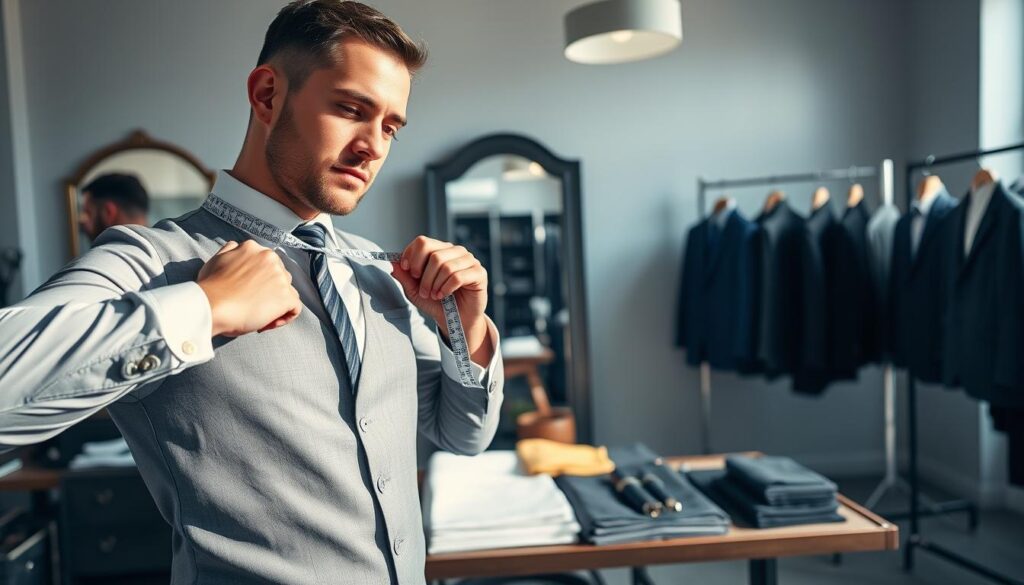
Measuring online or in person
Local appointments can include measuring and try-ons, which help us spot fit issues before delivery. Men can find custom tailored suits near them by comparing local fitting access and follow-up support.
Custom tailored suits for men online depend on clear measuring guidance and accurate entries. Hockerty lets customers choose fabrics and linings, and offers algorithm-assisted or at-home measurement.
Hockerty says its system can estimate measurements when a customer cannot measure themselves. Its suits also allow choices in fabric, lapel style, lining, and button color.
A study using 3D body scans and fit reviews from 120 adults tested ways to predict virtual garment fit. The garment fitting study included blazers, shirts, and trousers, but did not test custom suit services.
Fit guarantees and measurement corrections
The Hockerty brand listing describes coverage for alterations or remakes if the suit does not fit. Hockerty’s fit coverage is one example of a policy to check before paying.
Sumissura offers men’s made-to-measure clothing with digital body measurements, customization, and a fit guarantee. Read the terms to learn what the guarantee covers and how to start a correction.
Use these checks when taking measurements at home:
- Use the maker’s measuring instructions.
- Keep the tape level.
- Avoid pulling the tape tight.
- Repeat any measurement that seems inconsistent.
Before submitting measurements, confirm how the seller handles a fit problem and whether alterations or a remake are covered.
Which Suit Alterations Are Practical After Delivery?
Minor changes such as hemming trousers are usually more practical than trying to rebuild a jacket’s shoulders. Simple adjustments often cost less and carry less risk. A jacket that is one size too large is a safer alteration candidate than one needing major reshaping.
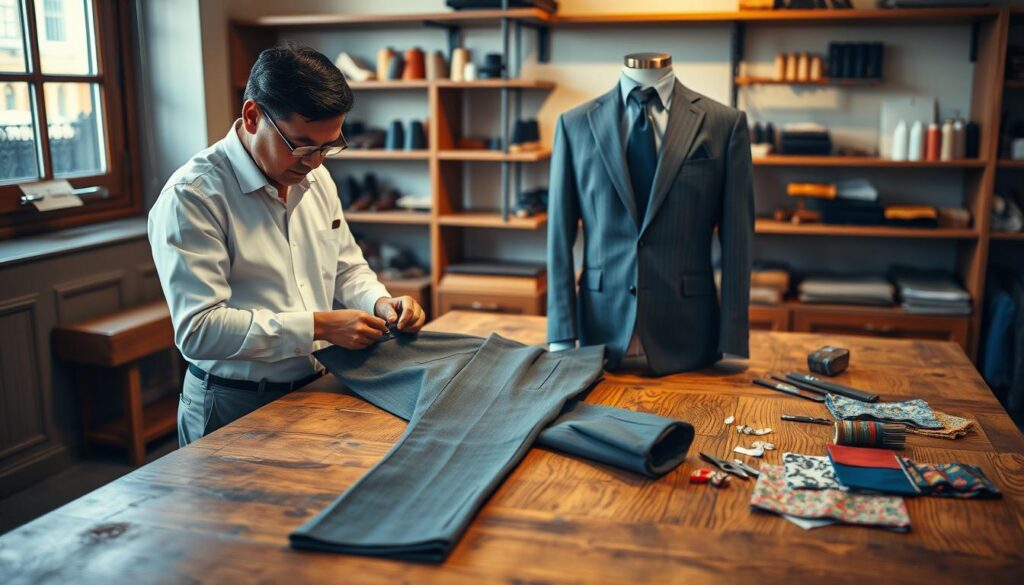
Common alterations to an off-the-rack suit, such as sleeve shortening, trouser hemming, or reducing the waist, cost $75-$200 in total in 2026. Here are typical prices for individual jobs:
| Alteration | Typical 2026 cost | Practicality |
|---|---|---|
| Trouser hemming | $20-$50 | Usually straightforward |
| Taking in the waist | $75-$150 | Commonly done |
| Shoulder work | $150 or more | Generally not recommended |
A tailor can usually shorten or lengthen a suit jacket sleeve by about 1/2 inch. Working buttonholes make larger changes difficult because a tailor cannot cleanly close the old holes without reweaving.
One tailoring rule of thumb allows a jacket to shrink by at most two sizes, but one size too large is a safer choice. A two-size jacket reduction may still fail if the garment’s shape does not suit the wearer.
Shoulder changes are generally not recommended. The shoulder structure is complex, and reshaping it can require major surgery rather than a simple alteration.
A full suit overhaul may take 4-8 hours in 2026, with labor rates of $40-$120 per hour. Ask for a quote before approving major work, since labor can quickly outweigh the cost of simple alterations.
Hockerty says its partner tailors can make final adjustments after delivery. Have a tailor inspect the garment before purchase if the shoulders are wrong, since that is one of the hardest areas to reshape.
Which Fabrics and Design Details Suit Your Occasion?
A work suit, a wedding suit, and a tuxedo call for different choices in fabric, color, and silhouette. For most wardrobes, we recommend a versatile fit and cloth before standout details. Choose a tuxedo for black-tie events, and a more distinctive shape when it suits your personal style.
For most work and formal wardrobes, start with versatile cloth and fit. Save a tuxedo for black-tie events.
Fabric, color, and silhouette
Two-piece suits cover many work and formal needs, while a three-piece suit adds a vest. Tuxedos suit black-tie events, and a sport coat can work when a full suit feels too formal.
Wool is a common suit fabric, while linen and cotton can suit warmer weather or a more relaxed setting. We can also compare colors and patterns, from plain navy to subtle checks.
Lapels, buttons, and fronts shape the final look. A double breasted jacket gives a distinct profile, while a mandarin collar creates a cleaner line without standard lapels.
For the best custom tailored suits for men, match the fabric and fit to how often you will wear the suit. Ted Baker sells blazers, pants, and vests separately, so shoppers can mix cuts and sizes.
Brooks Brothers offers traditional two- and three-piece suits in Italian or American wool. These examples show different routes to classic styles, not a ranking of which maker is best.
For the best online custom suits, compare measurement support, customization, and the stated fit policy. A style photo alone cannot show how a suit will fit your body.
Personalized linings and standout details
A custom suit with pictures inside can use a printed collage lining. TS Custom Suits lists its custom picture collage lining at $199.99 in PET Polyester or silk, in full color or black and white.
The lining comes as a 1m × 1.5m piece sized to fit virtually any jacket, so buyers do not need to provide jacket measurements. TS Custom Suits prepares a collage mock-up for approval before printing.
Standard priority takes 3-5 weeks, while fast priority can take as little as 3 weeks. The company can install the lining in a new suit, tuxedo, or sport coat, or send the fabric for a local tailor to install.
Use this checklist before choosing the final design:
- Fabric: wool, cotton, or linen.
- Color or pattern: solid, check, or another print.
- Lapel and front: standard, double breasted, or mandarin collar.
- Buttons: choose a color that suits the cloth.
- Lining: plain or personalized collage.
Approve a lining mock-up before printing, and leave enough time for the stated production window if the garment is for a fixed event.
Conclusion
The right custom suit is the one that fits your occasion, your body, and the amount of tailoring you want to invest in. We recommend balancing measurement support with the jacket construction and fit terms offered.
Compare available fabrics and styles with your event in mind. Start with your event date and measurements, then choose a maker whose ordering process and follow-up support suit your needs.
Choose the style you want, check the measurement and fit terms, and begin your order with the event date in mind.