
A fashion affiliate partnership works best when the products feel like a natural recommendation to the people who already trust our taste. For a US-based publisher, blogger, or creator, that can mean weighing designer and premium fashion partnerships against what our audience actually wants to wear. A cookie window is the period after an affiliate link click during which an eligible purchase can be credited to the affiliate.
We can compare program types, audience fit, affiliate mechanics, and ways to promote products with care. A strong match may support useful content, but no program can promise earnings. A useful program comparison starts with the audience, then checks the commission and terms against how that audience shops.
Key Takeaways
- Match each brand to the people who already read or watch our content.
- Compare commission, cookie window, returns, and payout terms.
- Choose broad retailers when readers need choice, and specialist labels for niche interests.
- Use clear disclosures and honest product opinions to protect trust.
- Check regional access and campaign rules before planning content.
What makes a fashion affiliate program a good fit?
An affiliate program pays a publisher when a tracked recommendation leads to an eligible action, commonly a completed sale. The key exchange is simple: we share an affiliate link, a shopper clicks it, and the brand may pay commission if the purchase qualifies.
Joining a program does not guarantee income or free products. Cost per sale is one common payment model, but the brand sets the rules for eligible orders, returns, and payment. An affiliate partnership also differs from an independent recommendation because the publisher may earn money from a reader’s purchase.
Joining a program does not guarantee income or free products. A commission is earned only when an eligible action meets the program’s rules.
For example, we might publish an outfit guide with a coat, shoes, and bag linked to their product pages. If a reader buys an eligible item through one of those links, the brand may credit a commission to our account.
That payment relationship does not make every opinion a brand-approved message. A recommendation can damage trust if it does not reflect our real view or glosses over a product’s limits.
The Federal Trade Commission says endorsements need clear disclosure when a material connection could affect how readers judge a recommendation. Its endorsement and testimonial rules cover paid endorsements and reviews. Put a clear disclosure close to the recommendation and affiliate link so readers can understand the relationship before they shop.
How do we evaluate a fashion partnership before applying?
A partnership is worth considering when the audience already has a reason to care about the product. Fit comes first, since a higher commission can underperform a lower one when the products do not suit our readers.
Check the audience, terms, and day-to-day content fit before we apply. Google Analytics, Instagram Insights, and TikTok Analytics can show which topics and formats draw attention. Those signals help us judge whether a brand solves a real need.
Match the brand to the audience
Compare the brand’s products with our audience’s interests, budget, and values. A luxury shoe label may suit readers who ask about workwear, while a high-priced evening bag may not fit a budget-conscious style page.
Review top-performing content, too. If readers save capsule wardrobe posts, a brand with versatile staples may make more sense than one built around trend pieces.
Check the earning terms
Look beyond the commission percentage. Check the cookie window, return reversals, payout rules, and typical product price, since each can change the value of a sale.
A 2025 impact.com report found that 44% of brands preferred cost per sale, compared with 35% of publishers. The different preferences show why publishers should read the payment terms, not just the headline rate.
Review the practical fit
Check approval requirements, available product photos, and whether the brand fits our normal content. A program may offer useful assets, but those assets cannot replace our own point of view.
- Audience fit: Do readers already care about this category?
- Product quality: Can we stand behind the items?
- Commission terms: How are eligible sales paid?
- Attribution window: How long can a click receive credit?
- Application requirements: Can our channel join?
The 80/20 rule is a practical way to focus on the small share of programs or content that may drive most results. It is a heuristic, not a guaranteed ratio. Before applying, write down the audience problem the brand solves and the exact content format that could solve it.
Best Luxury Fashion Affiliate Programs for Different Audiences
Coach Outlet has the highest stated US commission in this shortlist, while Sandro is the clearest contemporary-designer fit. These four options suit different shopping habits, from off-price finds to department-store edits.
Coach Outlet lists up to 20% per sale in 2026. That rate stands out in this comparison, but a headline percentage does not predict approval, sales, or earnings.
| Brand | Audience or category | Commission | Geographic scope |
|---|---|---|---|
| Coach Outlet | US shoppers | Up to 20% | US |
| Sandro | Contemporary designer womenswear | Up to 10% | US program, worldwide availability |
| Saks OFF 5TH | Off-price designer shopping | Up to 4% | US |
| Saks Fifth Avenue | Designer department-store shoppers | 3-6% | US |
Sandro suits content about contemporary Parisian style, while Coach Outlet may fit readers who look for recognizable accessories at outlet prices. Saks OFF 5TH can support value-focused designer edits. Saks Fifth Avenue may work for broad department-store coverage.
The table shows listed rates, not a promise that an application will be accepted or a sale will earn commission. Program terms can change, and the payable amount depends on eligible orders and the brand’s rules.
Compare the brand’s audience and current terms before treating the headline rate as an earnings forecast.
Which luxury retailers offer the broadest designer selection?
A multi-brand retailer is useful when our audience wants to compare labels or build a complete look in one place. NET-A-PORTER, Farfetch, and SSENSE offer wide selection, though their reach and editorial uses differ.
NET-A-PORTER carries over 800 designer brands. It supports polished wardrobe edits and designer comparisons, and it requires individual publisher approval for its international affiliate program.
Farfetch features over 1,300 brands from 50 countries and has a worldwide affiliate program. Its broad mix can suit stories about international labels, standout accessories, and varied price points.
SSENSE ships to 114 countries and has a worldwide affiliate program. Its range can support trend-led fashion coverage and outfit ideas for readers who shop across regions.
A large catalog helps when we build capsule edits or compare designers side by side. It also raises the need for careful curation: too many choices can turn a helpful guide into a long product dump.
- Occasion edits for weddings, work, or travel
- Designer comparisons based on style or use
- Seasonal wardrobe roundups with a clear theme
An international catalog does not mean every program accepts publishers in every market. We should check the program’s regional rules before planning a campaign around global stock.
Choose breadth only when we can narrow the catalog into a clear edit for the reader.
Which independent fashion brands fit niche audiences?
A specialist brand can make sense when its product category and point of view already appear in our content. A focused match can serve readers better than a bigger commission from an unrelated label.
Magda Butrym, Margovil, Topologie Limited, and Jewelhalo list 30-day cookies. Their product focus ranges from designer womenswear to bags and jewelry.
| Brand | Category | Commission | Cookie |
|---|---|---|---|
| Magda Butrym | Womenswear | 10% | 30 days |
| Margovil | Sustainable, season-less womenswear | 15% | 30 days |
| Topologie Limited | Bags and accessories | 20% | 30 days |
| Jewelhalo | Women’s jewelry | 20% | 30 days |
These labels can work in focused content, such as a designer womenswear profile or a guide to travel-ready bags. A niche product can give an audience a sharper reason to click than a broad assortment.
Other choices include Birdies at 10-15%, Mephisto USA at 10%, and Wolff Studios at 15%. Each lists a 30-day cookie. Birdies and Mephisto USA suit footwear content, while Wolff Studios can fit travel accessories.
Commission is only one part of the match. A 20% rate may be less useful than 10% if the audience has no reason to consider the product or the brand’s style.
Match the product to a real audience interest before comparing a 10% commission with a 20% one.
Can resale and off-price retailers suit luxury shoppers?
Resale can be the right luxury recommendation for shoppers who value access to designer pieces at a lower retail price. Pre-owned goods and off-price items appeal to people who want labels without paying full retail.
Resale content needs details about condition, sizing, and authentication. A used handbag is not the same as a new one, so a standard product review may leave out key buying facts.
The RealReal lists a 5% commission on a sold item priced at least $3,000. Its buyer route can suit shoppers seeking authenticated pre-owned items, while a seller-referral offer gives a $5 bonus after someone consigns at least 10 items, each with a resale price of $3,000.
Farfetch also includes pre-owned jewelry, bags, and clothing. That range may help publishers reach shoppers who want designer pieces with a prior owner rather than a new-season item.
Off-price designer shopping offers another kind of value. It focuses on reduced-price goods, while resale gives a second life to an item and may include signs of wear.
For a useful feature, name the item’s listed condition and explain the route the shopper will use. Avoid describing a pre-owned piece as new or implying that every item has the same wear history.
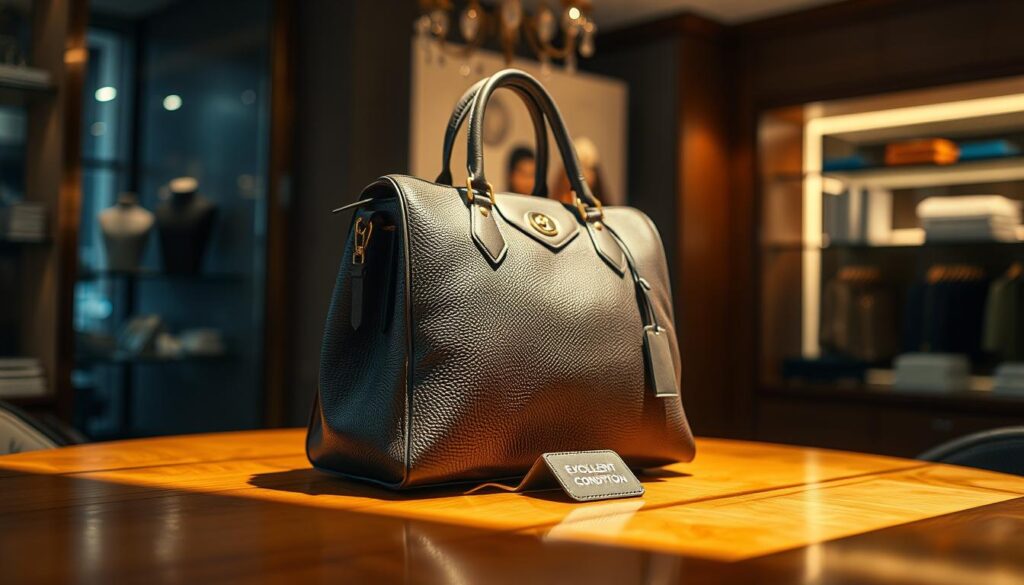
Describe the exact condition and purchase route before presenting a pre-owned item as a practical alternative.
Which affiliate networks and creator platforms should we compare?
A network is the route that connects a publisher to a brand program, while a creator platform may also organize shoppable content. The right route depends on how we publish and which brands we plan to feature.
Many affiliate programs do not charge an application fee, but their terms differ. The SHEIN affiliate program is reported to have no joining fee, though readers should confirm fees and rules for each program.
Retailer and publisher networks
Rakuten Advertising, CJ, impact.com, and Skimlinks help manage links between publishers and brand programs. They can handle applications, reporting, and payments, but the exact tools depend on the program.
Named programs in this guide use these networks. NET-A-PORTER, Coach Outlet, and other retailers may appear through different routes, so we should check the individual listing.
| Platform | Example programs or role | Typical publisher route | What to check |
|---|---|---|---|
| Rakuten Advertising | Retail brand programs | Apply through network | Market access and terms |
| CJ | Retail brand programs | Publisher account | Approval and payout rules |
| impact.com | Sandro, Coach Outlet | Partner marketplace | Program requirements |
| Skimlinks | Retail links and publisher tools | Publisher account | Eligible sites and link rules |
Creator-focused platforms
LTK is an influencer shopping platform that helps creators share shoppable content. It can suit social outfit posts where followers want to find the pieces shown.
A network and a creator platform may offer different ways to join, track, and share products. Check who administers the program and whether your preferred publishing channel is eligible before building a campaign around it.
How do commission rates and cookie windows affect earnings?
A 20% rate cannot earn commission if the customer’s order is not attributed under that program’s rules. Timing matters: an eligible sale must happen within the cookie window to receive credit.
Returns may cancel commission, and net-sales rules can reduce the payable amount. Some programs calculate commission after discounts, returns, or other adjustments, so the rate alone does not show the final payment.
| Purchase context | General cookie-window guidance | Example |
|---|---|---|
| Lower-priced fashion | 7-15 days | No named example |
| Luxury bags or fine jewelry | 30-60 days | Higher-consideration purchases |
| Named program examples | 14 or 30 days | NET-A-PORTER: 14 days; Magda Butrym and Topologie Limited: 30 days |
These ranges are general guidance, not a promise about any named program. NET-A-PORTER lists a 14-day cookie, while Magda Butrym and Topologie Limited list 30-day cookies.
Higher-priced items may take longer to consider, but a longer window does not ensure a sale. Readers may compare options, return an order, or buy through another route before the program credits the click.
Compare the commission base, return treatment, and cookie window together rather than ranking programs by percentage alone.
What is a SHEIN affiliate, and how is it different from an ambassador?
A SHEIN affiliate earns commission from eligible referred purchases, while an ambassador may have additional campaign compensation and scheduled deliverables. The two routes can differ in pay, posting plans, and how creators enter.
Reported affiliate commissions range from 10%-20%, with a reported 30-day cookie. Returns may reverse commission, so a referred order does not always lead to a final payment.
Affiliate and influencer participation
Affiliate or influencer creators use tracked links and can often post more flexibly than ambassadors. A 2026 guide describes affiliate applications as open, while the official US SHEIN Creator Center says participation is primarily by invitation.
The Creator Center does not state a follower minimum. Program routes can differ by region, so an open application described for one option does not mean every US creator can join through it.
A 2026 guide reports that commissions generally range from 10% to 20%, based on tier, region, and category. It also reports a 30-day cookie and possible commission reversals on returned purchases.
Ambassador partnerships and campaign rewards
A 2026 guide describes ambassadors as eligible for commissions, flat fees, and bonuses. It also describes performance-based invitations and agreed monthly deliverables.
By contrast, affiliate creators may choose posts more freely, and creators who join campaigns can receive gifts or rewards. Those items depend on campaign terms, not a guaranteed reward for every post.
Confirm the exact program route and terms shown for your region before relying on a guide’s description of another route.
How do you become a SHEIN influencer and get free products?
The official US Creator Center does not publish a follower minimum, and participation is primarily by invitation. There is no official number of followers stated for becoming a SHEIN ambassador.
Ambassador invitations are described as performance-based, not tied to a published follower count. A 2026 guide reports a 500-follower minimum for affiliate participation, while another reports roughly 1,000 or more engaged followers for many approvals.
Eligibility and invitations
Those figures are guide reports, not a universal official minimum. The official US Creator Center does not state a follower threshold, and a 2026 guide reports an age minimum of 18.
Keep an active profile with fashion content that fits the products you hope to feature. The affiliate program has no joining fee, but that does not promise approval, free goods, or sales.
Use official program pages or verified creator channels when checking an invitation. A message that asks for payment or sensitive account details deserves extra care.
Gifts, rewards, and payouts
Free products depend on campaigns, not on a promise to pay every creator for reviewing clothes. Selected creators may receive product invitations, and active creators may be invited to choose items each cycle.
Reported payouts are monthly after the account balance clears the program minimum. PayPal or bank transfer may be used, depending on the region.
- Maintain an active profile with relevant fashion content.
- Publish useful posts that show your style and audience.
- Apply or respond through official SHEIN channels.
- Read the campaign terms before accepting products or tasks.
Treat any unexpected invitation as unverified until it arrives through an official SHEIN channel.
What should creators know about SHEIN content rules and reviews?
A creator should read the posting and usage terms before accepting a campaign, not after publishing its content. Some campaign rules last beyond the day a post goes live.
SHEIN US requires creator-generated campaign content to stay posted permanently. The terms prohibit archiving, removing, changing, or editing that material without written permission.
Promotional Instagram and TikTok posts must use #ad or #SHEINpartner tags. Sponsored YouTube videos need a spoken sponsor disclosure, and stricter local laws take precedence.
Sponsored campaign content differs from a customer review or other contribution. Customer contributions must reflect a genuine personal experience, not a claim the reviewer did not personally see or use.
SHEIN may use customer contributions without compensation for 10 years or indefinitely where law permits. The Federal Trade Commission’s endorsement guidance explains why false or selectively shown reviews can mislead shoppers.
These rules matter when a creator wants to update a post after a product changes or a claim becomes outdated. Check whether written permission is needed before making any edit or removal.
Save a copy of the applicable terms and written permissions before posting campaign material.
How can we promote luxury fashion with trust?
A useful affiliate feature answers a real wardrobe question before it presents a product link. Useful details help readers judge whether a style or item suits their lives.
Firsthand use and clear disclosures support trust better than a row of links. Product feeds and banners can save time, but they cannot supply an authentic opinion.
Build useful editorial content
Choose a problem readers already have, then shape the feature around a practical answer. A focused edit can help shoppers compare choices without scrolling through unrelated products.
- Compare two designers for the same occasion.
- Build outfit ideas around one wardrobe staple.
- Make an occasion edit for work, weddings, or travel.
- Round up seasonal pieces with a clear use in mind.
Show the product in context
Original photos can show how a piece looks with real clothes, lighting, and accessories. Styling context helps readers picture an item beyond its product-page image.
Testing a product lets us describe fit, quality, and use from personal experience. If we have not tried an item, we should say what our opinion is based on rather than imply firsthand use.
Disclose and verify
Place a clear affiliate disclosure near the recommendation and link. Check that each link works, the product remains available, and any fit or quality claim matches what we know.
SHEIN’s affiliate program is reported to offer banners, product feeds, and promotional assets. Those tools can support a campaign, but our own judgment should guide what we recommend.

Recheck links and disclosures whenever an edit is updated or a product is replaced.
Is luxury fashion affiliate marketing worth it for your audience?
Luxury fashion affiliate marketing can be worth testing when the audience already trusts our product judgment and shops in the category. A small test can show whether readers act on useful fashion content.
High order values can come with longer consideration, returns, and more work to keep links current. Audience trust, retailer confidence, and conversion also affect results, so a high commission alone cannot predict earnings.
A clear fashion audience may respond to detailed product comparisons, wardrobe edits, or styling advice. A broad audience with little buying intent may bring clicks without eligible orders.
A 2025 impact.com report found that 44% of brands preferred cost per sale, while 35% of publishers preferred it. That gap reflects different interests in the same payment model, not a promise that any one program will perform well.
The wider industry has also supported large sales volumes. The Performance Marketing Association estimated that US affiliate marketing investment reached $9.1 billion in 2021 and drove $71 billion in e-commerce sales.
A high commission alone cannot predict earnings. Audience trust, retailer confidence, returns, and conversion all shape the result.
SHEIN may be worth considering when our audience shops its products and responds to the content we can make. We should weigh the reported 10%-20% commission range against returns, payout minimums, and campaign expectations, without assuming income.
Keep the first test small enough to manage. We can choose one audience segment, try a few relevant programs, and track whether readers move from useful content to eligible orders.
- Choose one audience segment.
- Select two or three relevant programs.
- Read each program’s terms.
- Publish one focused test.
- Measure qualified clicks and eligible orders.
Start with a small set of relevant partners and keep the one that earns both reader trust and measurable conversions.
Conclusion
The strongest fashion partnership is the one we can recommend credibly and maintain responsibly. Audience fit and clear terms matter more than a headline commission, especially when returns or changing product stock affect a campaign.
Before publishing, choose a suitable program and record its commission, attribution window, return policy, and disclosure requirements. That simple record gives us a clear reference when we update links or review results.
Choose one well-matched program, document its terms, and plan the first useful piece of content.