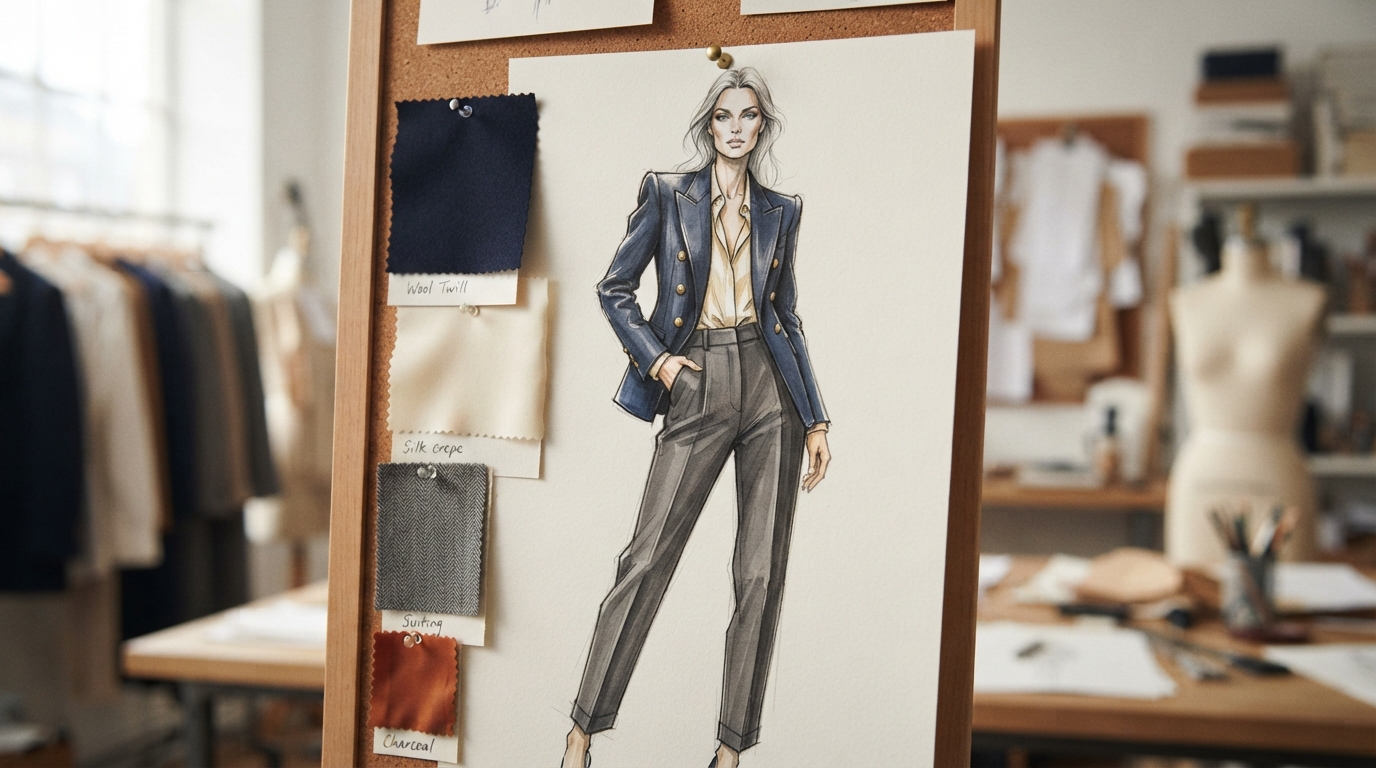
A garment’s shape often makes its first impression before its color, print or trim. Silhouette harmony is the balanced visual relationship between a garment’s structure, its design elements and the wearer’s proportions. Looking at outline, volume and fit helps us see how clothes create a distinct look. It also gives us a clearer way to talk about fashion beyond surface details.
We can use this approach when a piece looks different on a hanger than it does on a body. It helps us notice where fabric falls, where the eye goes and how the garment moves. Treat body categories as optional reference points, not rules for what anyone should wear.
Key Takeaways
- Read the outline before small details.
- Notice where the garment holds or releases volume.
- Look at fit and movement on the body.
- Use body labels only when they help.
- Let personal style and comfort guide choices.
What Does Clothing Silhouette Design Analysis Reveal?
We can read a garment’s broad outline from a distance before we can make out its small details. That outline shows the garment’s overall form on the body, apart from trim, buttons or stitching.
Silhouette analysis reveals how the garment’s parts work together and where they direct attention. It considers the garment’s structure and how that structure appears on the body, so a design can look different when worn.
The eye reads proportion through relationships, not through one feature in isolation.
The garment’s outer outline
We can break many garments into three main zones: the bodice, waistline and skirt. Their shapes and relative sizes set the outer form. A narrow bodice above a broad skirt creates a different impression from a straight garment with little change at the waist.
Those zones can repeat, contrast or shift in emphasis. A waistline placed high, low or at the natural waist changes how the garment’s parts relate, even when the fabric and trim stay the same.
Proportion and visual balance
Proportion compares the size and length of parts; balance describes how visual weight feels across the whole. Emphasis draws attention to a chosen area, while rhythm comes from repeated lines or shapes. Unity helps those choices feel connected rather than scattered.
These principles help us read fashion design as a whole. A bold shoulder, for example, may feel balanced when another detail supports it, while unrelated accents can compete for attention. Check whether the garment’s main visual emphasis feels intentional rather than accidental.
How Do Body Shapes Help Us Read a Garment?
Body-shape labels can offer a starting vocabulary, but they cannot capture every person’s proportions. Women’s clothing silhouette design analysis can consider both the garment outline and the wearer’s proportions, while keeping labels optional.
These labels describe broad shoulder, waist and hip relationships, not what anyone should wear. Common terms include:
- Triangle
- Oval
- Rectangle
- Hourglass
- Inverted triangle
The terms can help us discuss fit, but real bodies rarely match one label neatly. People may have traits that overlap, or proportions that change how a garment sits from one angle to another.
A body-neutral approach describes visible traits without assigning a type. We can note apparent height, curves and dominant features, then consider whether a design works with those traits or creates contrast.
The silhouette harmony research examines how visual choices and garment function can support balance across different bodies. It treats design decisions as tools, not rules tied to a single body type.
Use the description that helps you make a design decision, and leave the label behind when it does not.
Which Garment Silhouettes Create Different Effects?
An A-line dress narrows at the top and gradually widens toward the hem. That gentle expansion gives the skirt room to move while keeping the upper outline defined.
Garment silhouettes create different effects by placing volume in different areas. A straight form makes a continuous vertical line, while a full skirt and fitted bodice set structure against volume.
Fitted and waist-defined shapes
An empire waist places the waist seam below the bust, letting the fabric fall from that point. Fit-and-flare designs follow the upper body, define the waist and widen through the skirt. A sheath or pencil shape stays close to the body, while a column or straight dress keeps a more even line.
A mermaid shape fits through the bodice, waist and hips, then flares at or below the knees. These outlines can create strong contrast between fitted areas and the parts that open out.
Shapes built around volume
A ball gown pairs a fitted bodice with a dramatically full skirt. A trapeze or tent shape widens from the shoulders or upper body, with little waist definition. Architectural and oversized forms use scale or unusual structure to make the outline itself stand out.
Renaissance and medieval-inspired clothing also uses structured bodices, layered skirts and defined waistlines as expressive choices. For more dress examples, our guide to wedding dress silhouettes explores how shape affects fit and movement.
| Silhouette | Outline | Where volume sits | Typical visual effect |
|---|---|---|---|
| A-line | Narrow top, wider hem | From waist to hem | Gentle outward sweep |
| Column or straight | Long, even sides | Evenly along the body | Continuous vertical line |
| Fit-and-flare | Fitted top, flared skirt | Below the waist | Clear waist contrast |
| Ball gown | Fitted bodice, full skirt | Across the skirt | Strong contrast and drama |
| Mermaid | Close fit, then a lower flare | At or below the knees | Fitted line with a bold finish |
Choose the shape for the visual effect and movement you want, not for a body-type label alone.
How Do Lines, Color, Fabric and Construction Change Shape?
A single vertical panel can change the way a garment’s proportions read without changing its basic silhouette. Line direction guides the eye, while color and fabric affect which parts stand out.
Design choices can change visual emphasis, but they do not change the body itself. Vertical lines can create continuity, horizontal lines can add perceived width, and diagonal or curved lines can lead attention across a garment.
Lines and color direct the eye
Darker colors tend to recede, while lighter or brighter areas tend to draw attention. A bright collar or contrasting panel can make that area more noticeable. Color placement shapes the way we read an outfit; it does not promise a change in body size or form.
Use these quick design checks:
- Line direction: note whether lines run vertically, horizontally, diagonally or in curves.
- Color placement: find the brightest or darkest areas.
- Fabric behavior: see whether the cloth holds shape or follows contours.
- Seam or dart placement: notice where construction shapes the outline.
Fabric and construction shape volume
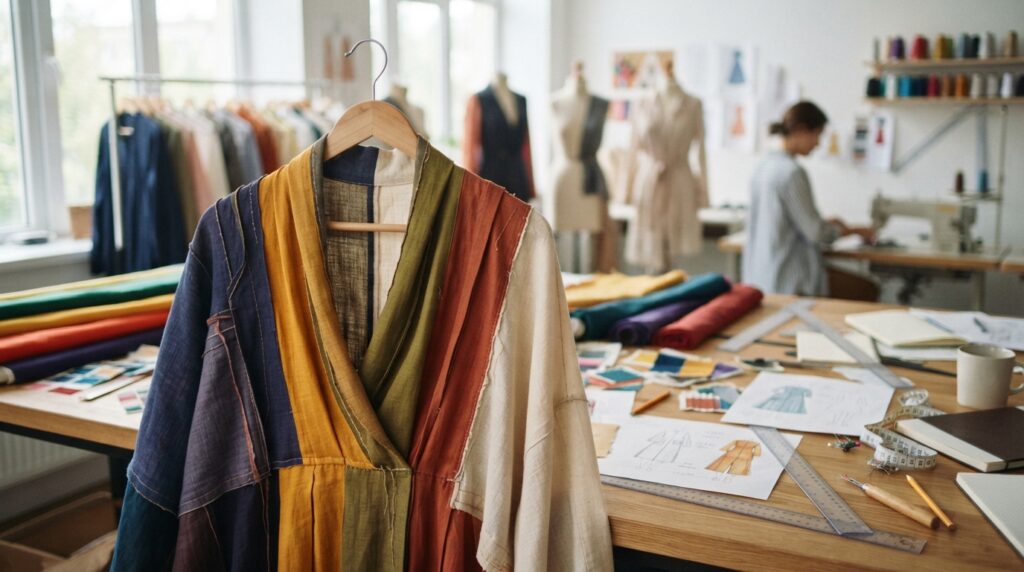
Stiff fabrics can hold a defined or sculpted form. Soft fabrics tend to follow the body more closely, though their weight and drape also affect how they fall.
Seams, darts, pleats and panels shape both fit and outline. A dart can draw cloth inward, while a pleat adds folds and room. A panel may create a clear line down the front or change how the garment holds its shape.
These choices matter in fashion design because structure comes from both material and construction. A designer can test the same outline in different fabrics and see how the finished garment changes.
Before changing the outline, check whether a line, seam or fabric choice is already creating the effect you want.
How Can We Analyze a Silhouette Step by Step?
A useful analysis starts with one clear view of the whole garment, not a close-up of its trim. A clothing silhouette design analysis template should track outline, proportion, volume, fabric behavior and movement.
Use the same five checks for a garment you own or a design you are sketching. This simple design process keeps attention on the full form before small details.
- Choose a clear reference, such as a full-body image from the front or side.
- Mark the shoulders, waist and hem.
- Note where the garment adds or removes volume.
- Observe how fabric and construction hold or release shape.
- Review the outline in motion and adjust the design.
A croquis is a fashion figure used as a drawing base. On a basic sketch, we can mark the bust, waist, hips, center line, legs and arms before drawing clothes over it.
Paper, tracing paper, scissors and tape support quick sketch-based exploration. Pattern flats, which show garment pieces laid out flat, and fashion images can also help us compare views and shapes.
Keep the source image simple enough to read. Full-body references from different angles can reveal how a hem, sleeve or back panel changes the outline as the wearer turns.
Compare the final outline with the original reference and revise any line that changes the intended balance.
How Can Personal Style Guide Silhouette Choices?
A personal style direction can help us choose which silhouette details feel expressive rather than random. A flexible style formula uses 70% of a basic archetype and 30% of an accent archetype.
Use the split as a styling suggestion, not a rule. The main direction can guide cut, volume, palette and comfort, while the accent can show up in shoes, texture, prints, jewelry or accessories.
Set a basic style direction
Creator style favors asymmetry, deconstruction and unusual cuts. Lover style leans toward flowing fabrics, accentuated waists and exposed collarbones. Hero style often uses minimal shapes, sporty or military details and room for movement.
Rebel style draws on grunge, leather and raw edges. Guardian style favors soft flannel and enveloping shapes. A mix can keep one idea clear without making every piece match.
Add an accent without losing balance
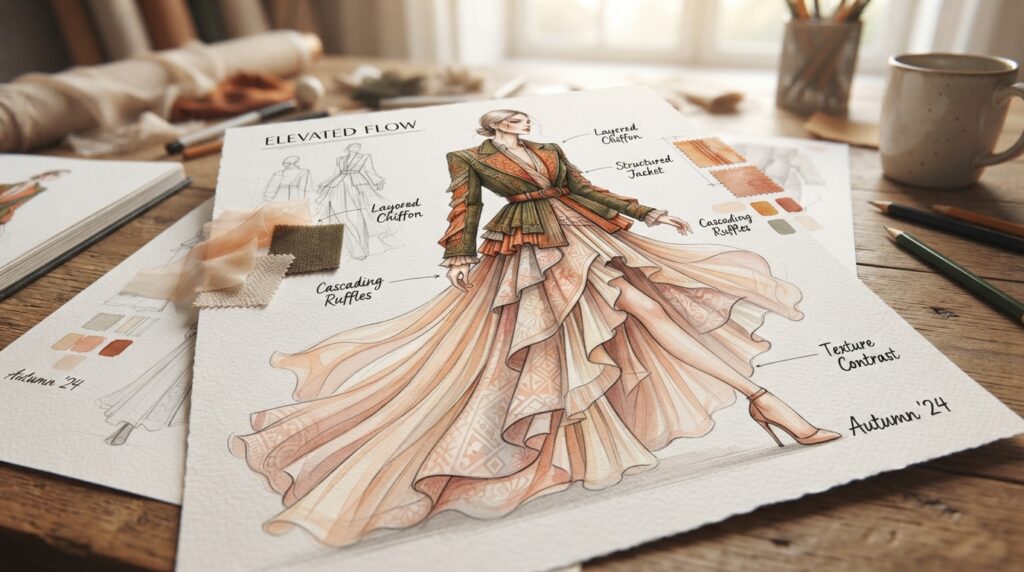
Jester style may break familiar proportions, while Mage style favors elongated, stretchy shapes. Seeker style uses functional layers and patch pockets; Sage style favors monochrome and precise proportions.
Innocent style leans on light colors and natural materials. Ruler style favors symmetry and a precise fit, while Caregiver style often uses comfortable, loose shapes with scarves or shawls. Explorer style pairs cargo pants, hiking boots and versatile layers.
Gen Z’s relaxed fits and easy layering can also serve as an accent rather than a full outfit plan. The clothing cue can sit beside a more polished base, with the wearer choosing which details feel natural.
| Archetype | Silhouette or clothing cue | Possible design detail |
|---|---|---|
| Creator | Asymmetric or deconstructed cut | Uneven hem |
| Lover | Flowing shape with a defined waist | Soft draped fabric |
| Hero | Minimal, sporty form | Utility pocket |
| Rebel | Grunge layers and leather | Raw edge |
| Guardian | Soft, enveloping shape | Flannel wrap |
Keep the formula flexible, and let comfort decide when a style cue does not feel right.
What Do Current Fashion Trends Show About Silhouette?
Fall-winter 2026 shows that volume can be dramatic without requiring every part of an outfit to be oversized. Fitted elements can balance a wide shoulder, billowy sleeve or full leg.
The season’s designs mix oversized and cropped shapes, cocoon-like tailoring, dramatic hems, and billowy pants and dresses. A voluminous-shouldered blouse with a fitted waist shows how contrast can keep an outfit’s outline clear.
Fall-winter 2026 collection details also include second-skin dresses, sheer layers, softened power dressing, gathered boule jackets and pencil skirts. Streamlined 1920s-inspired dresses bring in geometric details, fringe, gloves and velvet.
Gen Z fashion in 2026 pairs relaxed fits and easy layering with streetwear, retro references and selected Y2K details. Baggy pants, graphic tees, oversized T-shirts, chunky sneakers and bucket hats are streetwear cues.
Retro choices can draw on the 1970s, 1990s and early 2000s, including washed denim, track jackets, old-school knits and patterned shirts. Selected Y2K details include low-rise elements, baby tees, playful bags, logo pieces and glossy fabrics, without requiring a full revival look.
The Library of Congress generation ranges define Gen Z as people born from 1997 through 2012, and Millennials as those born from 1981 through 1996. Those ranges help us use the generation names clearly, not assume everyone shares one style.
Read a trend through its outline and proportions before deciding whether its surface details suit your style.
Conclusion
The clearest way to understand a garment’s design is to look first at its outline and where it holds or releases volume. Fabric and fit add more clues, while personal style and comfort remain individual.
We can start with one piece already in the closet. Sketch its outline or note where the volume sits, then notice what changes when we move in it.
That small exercise can make a future outfit choice more deliberate. Try the same quick analysis on one piece you already own, then use what you notice to guide your next outfit choice.