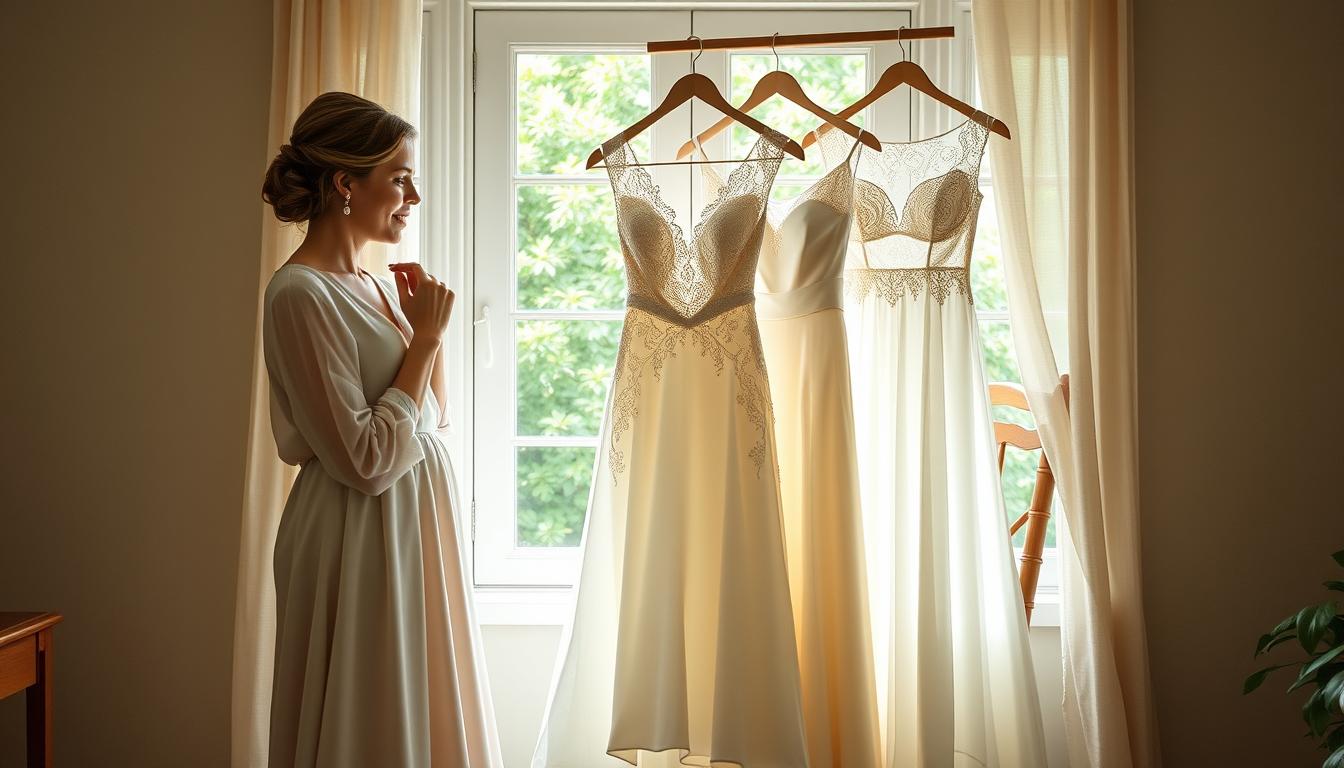
In 2026, U.S. brides spent about $2,100 on the gown alone on average. A gown can look beautiful on a hanger and still feel wrong for your ceremony, your comfort, or your personal style.
Shape, neckline, venue, movement, and total cost all compete for attention on the same shopping day. We offer practical ways to compare dresses and make a choice that feels right for the day and for you.
A silhouette is the overall shape of a gown, including how its bodice and skirt fit and flare. Start with the feeling and setting you want, then use fit, fabric, and budget to narrow the choices.
Key Takeaways
- Try an A-line gown as a flexible first option, not a rule.
- Compare comfort and movement while walking, sitting, and turning.
- Choose details that suit your taste, setting, and ceremony plans.
- Build a budget that includes alterations and other costs.
- Order early enough for production, delivery, and fittings.
- Ask for the size chart and measurements used for your order.
How Do You Choose the Best Wedding Dresses for Women?
For a versatile first try-on, we would start with an A-line and use five priorities to narrow the rest. An A-line has a fitted bodice and a gently flaring skirt, and it offers many brides a flexible starting point.
Many shoppers find this shape flattering across body types, but it is not a rule about what anyone should wear. Wedding dress designs for ladies range from minimalist to ornate, and the right gown fits the wearer’s priorities first.
Try an A-line first if you want a flexible starting point, then let comfort and personal taste guide the choice.
- Personal style: choose details that feel like your everyday taste, or a more dressed-up version of it.
- Comfort and mobility: check whether you can walk, sit, and move your arms with ease.
- Ceremony setting: think about the room, ground, weather, and formality of the event.
- Preferred silhouette: decide which overall shape you want to try first.
- Total budget: include the gown, alterations, and accessories in your spending limit.
This list helps us compare bridal gowns without treating every detail as equally important. It also keeps a striking photo from outweighing how a dress feels after an hour.
Keep the shortlist to three gowns that meet your comfort, setting, and budget needs.
Which Wedding Dress Silhouette Suits Your Shape?
Petite brides can begin with an empire waist or high-waist A-line, while a tall bride may want to try a mermaid, trumpet, or ball gown. These are starting points, not rules about who can wear each silhouette.
A high-waist A-line gown can create the illusion of height on a petite frame, while a sheath style may also work well. Compare waist placement and movement during the fitting, not just the mirror view.
Gowns for petite and tall frames
Petite brides may like an empire waist, where the waist seam sits high, or a high-waist A-line. A sheath can also make a clean option to try.
Tall brides can consider mermaid, trumpet, and ball-gown silhouettes. Horizontal details or a dropped waist may help balance a long frame, depending on the design.
Styles for hourglass and pear shapes
Hourglass figures may enjoy mermaid or trumpet gowns that show curves. A-line and ball gowns can also draw attention to the waist.
Pear-shaped figures can try A-line or ball gowns that flow over the hips and highlight the waist. Empire-waist gowns offer another option to test.
Options for apple and athletic shapes
Apple-shaped figures may prefer A-line or empire-waist gowns that skim the midsection and draw the eye upward. Try different bodice lengths to compare the effect.
Athletic or ruler-shaped figures can use a defined waist in an A-line or ball gown to create curves. A sheath can instead highlight a toned physique.
Choose the silhouette that feels balanced and comfortable when you sit, walk, and turn.
A-Line, Ball Gown, Mermaid, or Sheath?
A-line is the easiest all-purpose silhouette to start with, while the best alternative depends on whether you want volume, curves, or clean lines. Compare skirt shape and movement in person, since two gowns with the same label can feel different.
Classic silhouettes include A-line, ball gown, mermaid, trumpet, sheath or column, empire waist, and tea-length. The table focuses on four common choices and how their skirts move in practice.
| Silhouette | Where the skirt begins to flare | Overall shape | Movement |
|---|---|---|---|
| A-line | From the waist | Fitted bodice, gentle flare | Usually allows an easy stride |
| Ball gown | At the waist | Fitted bodice, full skirt | Needs room around the skirt |
| Mermaid | At or below the knee | Close fit through hips, then flare | Can limit long steps |
| Sheath or column | No strong flare | Straighter line from bodice down | Moves close to the body |
An A-line wedding dress gives many shoppers a useful middle ground between close fit and volume. A ball gown wedding style has a fitted bodice with a full skirt, while a mermaid gown stays close through the hips.
Trumpet gowns flare from mid-thigh, unlike mermaid gowns, which flare at or below the knee. Tea-length skirts end above the knee, so their shape and stride feel different from a floor-length skirt.
Try a sheath if you want the skirt to follow a straighter line. Check how easily you can walk and sit in the exact skirt volume you plan to wear.
Which Neckline and Sleeves Feel Right?
A neckline changes the gown’s visual balance and how secure it feels through a long ceremony and reception. Choose a neckline you can wear comfortably while moving, not only one you like in a still photo.
A sweetheart neckline has a curved top edge, while a V-neck draws the eye vertically. A strapless sweetheart style can feel secure when its bodice fits well, but support matters.
An illusion neckline uses sheer-looking coverage, while a square, scoop, halter, or strapless neckline creates a different line. Cap sleeves add shoulder coverage without a full sleeve.
- Support: check whether the bodice stays in place without constant pulling.
- Neckline comfort: notice any pinching, slipping, or pressure at the edge.
- Arm movement: reach forward and raise both arms.
- Undergarments: confirm that your bra or other support works with the gown.
- Seated back fit: sit down and check how the back feels against your body.
Off-the-shoulder details leave the shoulders exposed while adding fabric around the upper arm. Sleeves can change the amount of coverage and how freely the arms move.
Raise your arms and sit down in each finalist to check that the neckline stays comfortable and in place.
Which Fabrics and Details Match Your Setting?
Lace and tulle bring texture and softness, while satin gives a smoother, more structured impression. Feel and move in the gown before choosing by appearance, because layers and lining can change the fabric’s weight.
Chiffon can create a soft, flowing look, while lace may add pattern across the surface. The fabric alone does not tell us how the whole gown will feel.
| Fabric | Visual character | Movement or feel | Setting to consider |
|---|---|---|---|
| Lace | Patterned, textured surface | Texture can feel raised or soft | Garden ceremony |
| Tulle | Fine, airy net-like layers | Light layers can move around the skirt | Outdoor ceremony |
| Satin | Smooth, often lustrous surface | Can feel more structured | Formal indoor ceremony |
| Chiffon | Soft, light appearance | Often gives a flowing impression | Warm-weather celebration |
Bridal fabric choices also include gazar, silk faille, and crepe-back satin. Floral appliqués, lace overlays, and beadwork add surface detail to a gown.
Tulle lace combines a net-like base with lace pattern or trim, but construction matters. Lining, layers, beadwork, and embellishments can make a fabric feel heavier or more textured against the skin.
Feel the fabric against your skin and walk in the gown before deciding that its look suits the setting.
Which 2026 Bridal Trends Feel Timeless?
The 2026 bridal look favors expressive texture and shape, from dimensional florals to sculptural draping and luminous fabric. One distinctive detail on a lasting silhouette is a lower-commitment way to try a trend.
Romantic floral wedding dresses can use printed fabric, lace, or dimensional appliqués. We can enjoy the latest wedding dresses for ladies without choosing every new detail at once.
Romantic florals and dimensional embroidery
Monique Lhuillier’s Spring 2026 collection uses watercolor-style floral prints on gazar, three-dimensional floral appliqués, and hand-embroidered raffia lace. These details give floral designs texture as well as pattern.
Layla pairs floral-printed gazar with an off-the-shoulder ball gown shape, billow sleeves, and a skirt slit. Maxfield uses rose lace, a basque waist, and a cascading layered skirt.
Laurel is a strapless raffia-embroidered tulle ball gown with raffia leaf detail. Clover combines three-dimensional embroidery with a drop waist and a structured cone skirt.
Sculptural draping and dramatic silhouettes
Fall 2026 designs include dimensional florals, cascading embroideries, sculptural silhouettes, and sculptural couture craftsmanship. Those shapes make the gown itself the main design feature.
Some bridal gowns use bold draping or a more dramatic skirt, while others keep the shape simple. A fitting shows whether the detail feels comfortable from every angle.
Luminous fabrics and modern classics
Luminous fabrics, creative details, bridal separates, romantic lace, vintage-inspired touches, and modern classics all appear in 2026 trend forecasts. Avalon offers one example: a matte-satin V-neck column gown with a detachable overskirt.
Gown names here are design examples, not endorsements. Choose a trend because you enjoy wearing it, not only because it is new.
How Can Vintage-Inspired Wedding Dresses Feel Modern?
A vintage-inspired gown feels current when one clear era reference is balanced by a shape that feels like you. Use one period detail as an accent, then keep the rest of the design restrained.
A 2026 vintage-inspired bridal edit draws on Gatsby-era glamour and 1990s style. Designers in the edit include Danielle Frankel, Erik Charlotte, Tanner Fletcher, and Cinq.
Gatsby-era glamour and ornate detail
Gatsby-era inspiration can bring ornament, decorative lace, and a sense of glamour to bridal gowns. A single beaded detail or lace panel can suggest the period without turning the whole look into a costume.
Pair ornate details with a modern silhouette or a simple veil. That contrast lets the dress feel personal rather than like a copy of a past era.
1990s lines and vintage details
1990s-inspired gowns often lean toward cleaner lines and less decoration. A simple satin gown can take on a vintage mood through its neckline, back, or one small accessory.
Compare how the details work with your own style, not just the decade they recall. Choose one era detail to anchor the look, then keep the remaining styling simple.
Are Colorful and Nontraditional Wedding Dresses Right for You?
Color can be a quiet tint, a bold choice, or one detail on an otherwise traditional gown. Colorful wedding dresses can work for any ceremony when the shade and design feel intentional.
Blush, blue, gray, and mint offer different ways to move beyond white. Nontraditional wedding dresses with color may be fully colored, softly tinted, or styled with a colored accessory.
Think about how the gown will look beside the wedding palette and in photos. A subtle color can still stand out against white flowers or a bright background more than expected.
Monique Lhuillier’s Spring 2026 Marmont is a silk-faille strapless mini-skirt gown with a large blossom flower. It is one example of a short, statement-making bridal design, not a recommendation to buy it.
- Photo check: view the shade in daylight and indoor lighting.
- Palette check: compare it with the wedding colors and flowers.
- Rewear check: decide whether wearing it again matters to you.
Use these checks before choosing a dress design or matching accessories. View the color in daylight and indoor lighting before choosing the final shade.
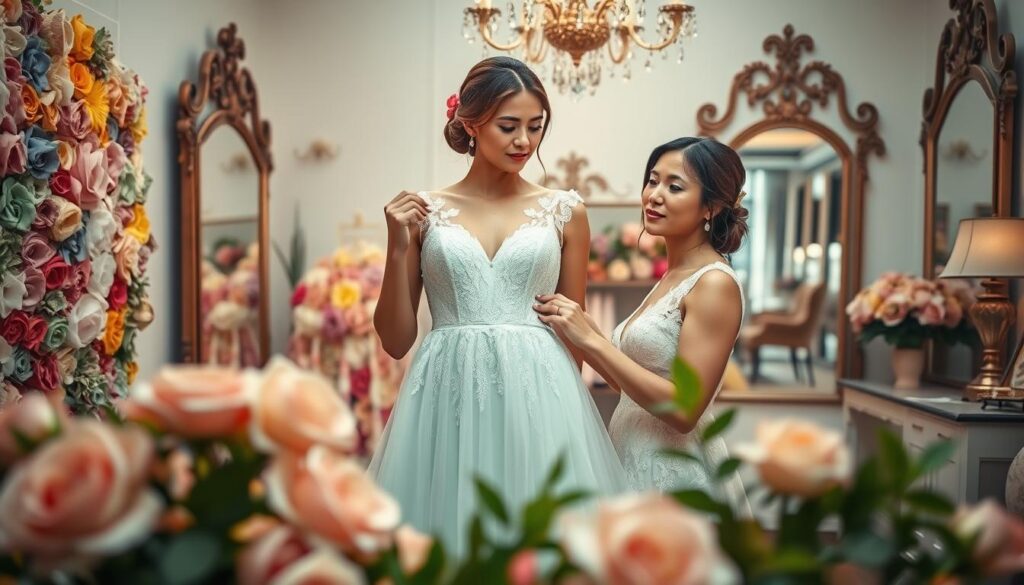
How Should Your Dress Fit the Wedding Setting?
A beach ceremony calls for different movement and travel considerations than a formal indoor wedding. Match the gown to the route and ground, then check how it feels while walking and sitting.
A short route across a courthouse floor may suit a simpler hem, while a garden path can bring uneven ground. For a beach, consider sand and how much effort a long skirt takes to move.
Destination wedding gowns cost more in the 2026 figures: hometown brides spent about $2,000 on average, compared with $2,900 for international destination brides. A separate 2026 figure puts destination-wedding gown spending at an average of $2,900.
Those numbers describe different comparisons, so they should not be treated as one shared estimate. Travel can affect the budget as well as the way a gown must pack.
Check how the gown folds into a travel bag and whether its fabric may wrinkle. Look at the actual ceremony surface before choosing a train or layered skirt.
Check the route from the ceremony entrance to the reception before committing to a long train.
What Should You Know About Bridal Sizing and Fit?
Bridal sizing can differ from everyday clothing sizes, so the number on the label is not a reliable way to judge fit. Ask for body measurements and the brand’s size chart before placing an order.
A salon stylist can measure the bust, waist, hips, and back, then compare those numbers with the gown’s chart. The size ordered may be larger than your usual clothing size, and that does not describe your body’s worth.
A lace-up back offers one possible fit feature, but it does not mean every gown can adjust to every measurement. Construction sets limits on how much a dress can change.
Olivia Bottega’s 2026 winter collection lists custom sizes from US 0 through US 30, including a US 20 lace-up option. Its collection lists 51 A-line dresses, 20 ball gowns, 18 convertible dresses, five mermaid dresses, three sheath dresses, and two midi or short dresses.
Those numbers describe that collection only, not the bridal market overall. Check where the bodice sits, whether the back closes comfortably, and whether the hips allow a natural step.
Ask the stylist to record the gown’s measurements and the exact size chart used for the order.
How Much Does a Wedding Dress Cost?
For a U.S. bride shopping in 2026, a practical starting budget is $1,500-$2,500 for the gown alone, before alterations and accessories. The average gown-only cost is about $2,100, so the tag price is only part of the total.
Most U.S. brides spent between $1,500 and $2,500 on the gown in 2026. The average U.S. wedding dress price was about $2,100, excluding alterations, a veil, shoes, and preservation services.
Salon and mid-market gown budgets
A mid-market salon gown may cost about $3,000-$5,000 by the time it is in the closet. Related costs can include alterations and accessories, which help explain the gap from the gown’s initial price.
The average U.S. wedding cost in 2026 was $34,000. For couples near both averages, the gown made up about 6% of the total.
| Budget reference | 2026 amount | What is included |
|---|---|---|
| Average gown-only price | About $2,100 | Gown, not alterations or accessories |
| Common gown-only spend | $1,500-$2,500 | Gown alone |
| Mid-market closet total | $3,000-$5,000 | Gown and related costs |
| Designer or couture entry level | About $2,500; couture over $10,000 | Designer starting prices or couture gown |
Designer and couture price levels
Designer wedding dresses had opening prices around $2,500 in 2026, while couture gowns could cost more than $10,000. Luxury wedding dresses can therefore sit far above a typical gown-only budget.
Olivia Bottega’s winter 2026 collection listed 99 products, with the highest listed price at $6,370. That is a snapshot of one collection, not a market benchmark.
Compare the full closet-ready estimate rather than deciding from the gown’s tag price alone.
What Alterations Should You Budget For?
Set aside about $700-$1,000 for full wedding dress alterations in 2026, then refine the estimate after a seamstress sees the gown. Construction and the amount of work shape the final bill.
A hem, bodice adjustment, and bustle can each add work, especially when a gown has layers or lace. Small changes can take care when lace placement must stay balanced.
| Alteration | Typical 2026 price range | What affects the work |
|---|---|---|
| Simple hem | $70-$150 | Fabric type and hem finish |
| Lace or layered hem | $150-$280 | Layers and lace placement |
| Bodice take-in or let-out | $100-$200 | Seam allowance and construction |
| Bustle | $75-$175 | Skirt weight and bustle design |
Construction, layers, lace placement, and the amount of sewing all affect the final price. The same hem can take more work on a layered gown than on a simple skirt.
In Zola’s 2026 survey, 29% of couples named wedding dress alterations as an unexpected fee. Late requests accounted for 68% of unexpected alteration costs in 2026, but that figure does not describe every bride’s bill.
The first alteration fitting is recommended 10-12 weeks before the wedding. Book the first fitting 10-12 weeks before the wedding and bring the shoes planned for the day.
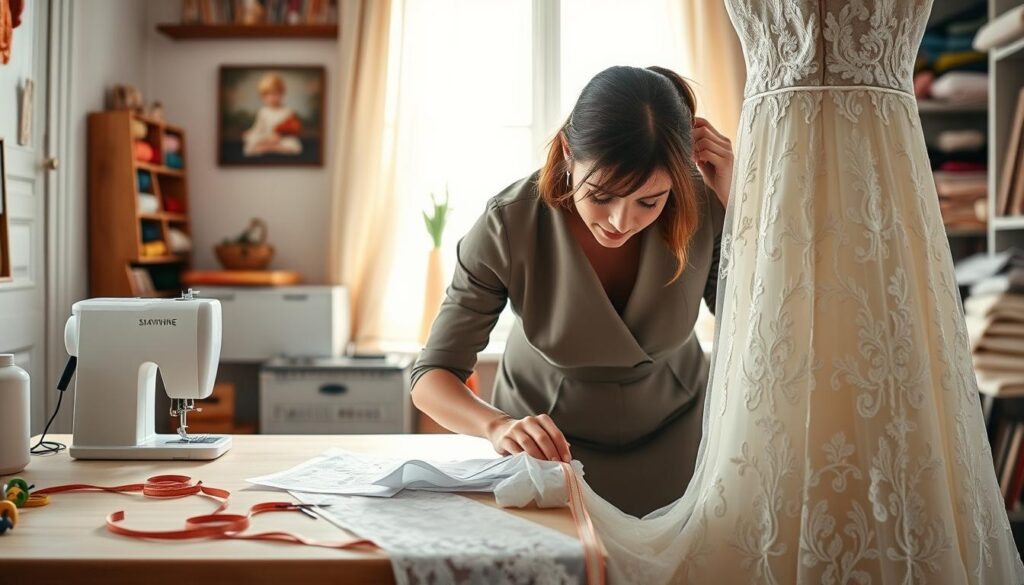
When Should You Order a Wedding Dress?
Order 9-12 months before the wedding when possible, because production alone can take 4-6 months. Leave time for delivery and fittings, not just the gown’s time in production.
Ordering early can help avoid expedited-order surcharges. Rush options and fees depend on the seller and the details of the order.
Production time and order timing
Wedding gowns typically need 4-6 months for production in 2026. The 9-12 month ordering recommendation leaves more room for a slow production period or a change in plans.
OKSANA MUKHA recommends ordering at least six months before the event and lists standard production at about three months, depending on workload. This is that company’s guidance, not a promise for every bridal order.
Delivery, fittings, and deadline buffers
Production ends when a gown is ready to ship; shipping time comes after that. OKSANA MUKHA says delivery usually takes 7-21 days, based on location and shipping service.
Once the gown arrives, leave room for a first fitting and later adjustments. A dress arriving close to the wedding can leave little time to solve a fit issue.
Ask for the estimated ready date, shipping window, and fitting plan when you order. Confirm the estimated ready date, delivery window, and fitting schedule in writing before placing the order.
How Do You Shop for a Wedding Dress?
A focused appointment is easier when we bring a budget, a few reference images, and an open mind about the silhouette. Choose a small set of priorities before trying gowns, so the visit stays useful.
Large online collections can feel hard to compare at first. Pronovias listed 429 wedding-dress results on its 2026 collection page, while Azazie listed 283 items.
Preparing for a salon appointment
Use filters for neckline, length, fabric, size, and price to cut down the results. Those page counts show the size of two collections, not an endorsement of either brand.
- Bring inspiration images that show details you like.
- Wear undergarments similar to those planned for the wedding day.
- Bring the planned shoes or a heel of similar height.
- Set a budget that includes alterations.
Tell the stylist what you want to feel and do during the day. A few clear examples help the appointment start with gowns that suit your plans.
Comparing finalists after the try-on
Try the same finalists while walking, sitting, and raising your arms. Record comfort, back fit, mobility, and the total expected cost for each gown.
Take notes before changing, since small differences between dresses can blur together later. Before choosing, make sure the gown still feels comfortable after walking, sitting, and raising your arms.
How Can You Preserve or Rewear Your Dress?
Arrange professional cleaning soon after the wedding, before stains and body oils have more time to set. Tell the cleaner about every visible stain, since spots may need special care.
Some gowns can be restored or worn again, though no cleaning or storage method guarantees a perfect result. A 1953 Christian Dior wedding gown was restored and worn by its owner’s granddaughter in 2020.
That example shows what restoration can make possible, not what every gown will allow. The dress’s fabric, condition, and construction all affect its future use and care.
- Arrange professional cleaning soon after the wedding.
- Tell the cleaner about visible stains and where they appear.
- Store the gown in breathable, acid-free materials.
- Keep it away from sunlight and humidity.
- Lay or gently fold delicate fabric with acid-free tissue.
A breathable, acid-free garment bag can help protect a cleaned gown. Delicate dresses may do better laid flat or gently folded with acid-free tissue than hung for years.
You may choose to wear the gown again or repurpose its fabric into another item. A shorter hem or changed details can give the dress a new use, depending on its design.
Check the storage space for moisture and direct sunlight before putting the gown away.
Conclusion
The best choice is the gown that feels like you and works for the day you are planning. A good decision balances personal taste, comfort, and a realistic total budget.
Keep a short list of styles you want to try and set a clear spending ceiling before the appointment. That gives you room to notice how each gown feels without losing track of the full cost.
Book a try-on and take your preferred shoes, inspiration images, and total budget.