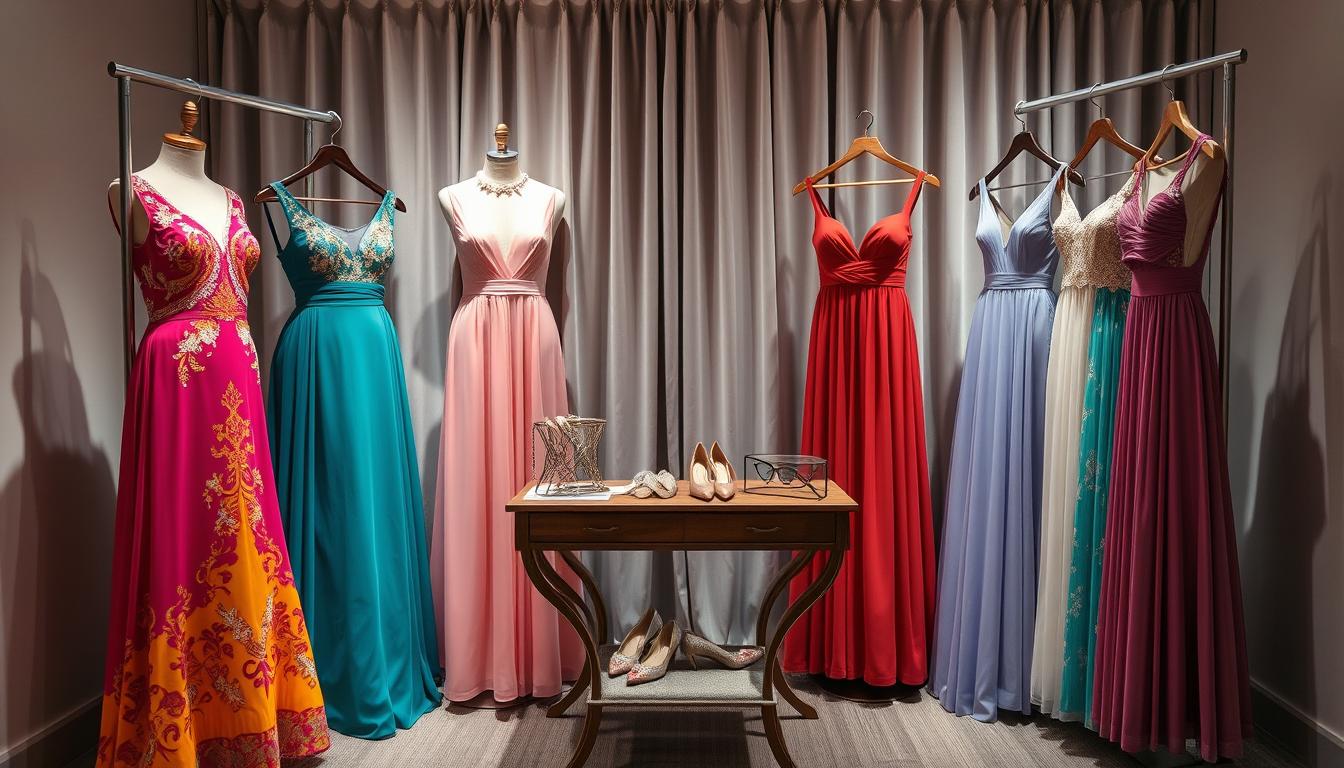
Rent the Runway’s Full Subscription Closet includes pieces with retail values up to $3,000. A designer rental is the strongest starting point for a reader who wants an elevated event outfit without buying it outright.
A rental rotation is a subscription arrangement in which members wear borrowed items and return them to exchange for other pieces rather than buying every item. Other services send stylist-selected clothing to buy, or curate menswear and seasonal packages.
Here, “luxury” means designer access or premium styling, not only couture-priced purchases. We highlight options for event looks, ongoing wardrobe rotation, self-directed trends, and men’s styling. The right choice comes down to whether you want to borrow, buy stylist-selected pieces, or receive a curated package.
Key Takeaways
- Rent the Runway is our leading pick for designer rentals and event outfits.
- Armoire offers a high-end rental rotation, while Nuuly lets members choose trend-led pieces.
- Stitch Fix sends stylist-selected clothes to buy, not borrow.
- Stately focuses on curated menswear packages.
- Compare the ongoing charge, what it covers, and how often you will wear the clothes.
Which Luxury Fashion Subscription Boxes Fit Your Style?
For the broadest designer-rental use case, we recommend Rent the Runway, while Nuuly, Stitch Fix, Armoire, and Stately fit distinct priorities. Rent the Runway works especially well when you want eventwear or access to designer fashion without buying each piece.
Choose a service by its clothing model first. The table compares rental access, stylist help, and curated packages, so you can quickly narrow the field.
Choose a service by its clothing model first, then weigh its style options and trade-offs.
Readers looking for the best luxury subscription boxes may prefer designer rentals, stylist-selected purchases, or a seasonal package. The best monthly clothing boxes also depend on whether you want to choose each item yourself.
| Service | Model | Best fit | Main trade-off |
|---|---|---|---|
| Rent the Runway | Designer rental | Eventwear and designer access | Items must be returned |
| Armoire | High-end rental | Recurring wardrobe rotation | Rental rather than ownership |
| Nuuly | Choose-your-own rental | Trend experimentation | No stylist guidance |
| Stitch Fix | Stylist-selected purchase box | Help choosing clothes to own | Styling fee applies |
| Stately | Men’s curated package | Coordinated outfits | Entry and premium tiers differ |
Nuuly suits readers who want lower-cost monthly trend rentals and control over the pieces. Stitch Fix helps shoppers buy clothes with personal styling, while Armoire suits a high-end rotation and Stately serves men seeking curated outfits.
Choose by the way you want to use the clothes, not by the word “luxury” on a service’s homepage.
How Do Rental, Styling, and Purchase Boxes Differ?
The key difference is whether a customer returns the clothes, buys selected pieces, or spends a monthly credit. The billing model matters because an “included” item may still involve a credit or purchase obligation.
Know what the recurring charge buys before you join. Rental services, purchase boxes, and credit memberships can all send clothing, but their payment rules differ.
Renting pieces to wear and return
With rental rotation, you borrow clothing for a set period or until you want another selection. Rent the Runway and Nuuly are examples: members wear rented pieces, then return them to make room for new items.
The rental charge buys access, not ownership. A member may also have to plan around the number of pieces allowed at home or the service’s exchange schedule.
Buying items selected by a stylist
A stylist-selected purchase box sends chosen pieces for an at-home try-on. Stitch Fix is one example: you decide which items to keep and pay for those pieces, while the styling service has its own fee.
Credit-based memberships work differently. A monthly credit may be used toward shopping, while a stylist-selected service charges for help choosing clothes.
- Rental rotation: receive borrowed clothing; decide when to return pieces or exchange them.
- Stylist-selected purchase: try chosen items at home; decide which clothes to buy.
- Credit-based membership: receive shopping credit; decide whether to spend it or skip the month.
“Included” does not always mean free. A monthly charge can buy rental access, a styling service, or shopping credit, and those are not the same benefit.
Before signing up, identify whether the recurring charge buys access to rentals, a styling service, or shopping credit.
How Much Do These Services Cost, and Which Are Affordable?
Among the tested rental plans, Nuuly costs $98 per month for six pieces, while the tested Rent the Runway and Armoire plans rise to $129 after their first month. That ongoing price gives a clearer comparison than an introductory offer alone.
A styling fee, rental charge, and shopping credit are not directly comparable. Each pays for a different kind of access, and a low starting charge may not include clothes you decide to buy.
For a lower-cost clothing subscription, the right choice depends on whether you need designer rentals, a stylist, or clothes to keep. The tested prices below show the charges and what each one covers.
| Service | Stated charge | What the charge covers | Price condition |
|---|---|---|---|
| Rent the Runway | $78 for five items in month one, then $129 monthly | Tested five-item plan | First-month price changes after month one |
| Nuuly | $98 per month | Six rentals | Monthly rental plan |
| Armoire | $99 for seven items in month one, then $129 monthly | Tested seven-item plan | First-month price changes after month one |
| Stitch Fix | $20 styling fee | Credited toward kept items | Clothing purchases cost extra |
| Fabletics | $59.95 monthly member credit | Shopping credit | Members can skip or buy individually |
In June 2026, the tested Rent the Runway plan charged $78 for five items during the first month, then $129 monthly. Its current subscription page lists plans starting at $129 per month.
Nuuly’s tested plan cost $98 monthly for six rentals. The tested Armoire plan charged $99 for seven items in its first month, then $129 monthly.
Tested rental plan prices can change with the plan and month. Stitch Fix clothing prices start at around $32 and reach about $500 for women’s and men’s items, apart from its styling fee.
Compare the ongoing charge and what it pays for, not only the introductory month.
Which Women’s Services Offer Designer Access or Curated Style?
For designer eventwear and repeat access to premium pieces, Rent the Runway and Armoire are the strongest women’s rental options in this group. They serve different wardrobes: one offers distinct closet choices, while the other supports a high-end rotation.
Check the closet or edit before paying for access. A service may cover everyday pieces but leave out the formalwear or designer label you want.
Designer rentals for eventwear and wardrobe rotation
Rent the Runway’s Full Subscription Closet includes more than 750 designer brands, with items carrying retail values up to $3,000. Its Limited Subscription Closet focuses on everyday clothing and accessories with retail values up to $350.
The Limited closet excludes formal wear, select designers, and the Rent the Runway Vault. That makes it a different option, not simply a smaller version of the Full closet.
Armoire is another high-end rotation choice. Its unlimited plan allows weekly exchanges, which may suit someone who wants fresh pieces across work and social plans.
Seasonal and trend-led fashion selections
Nuuly lets members choose from familiar labels such as Anthropologie, Urban Outfitters, and Free People. That self-directed approach can make trend experimentation easier for shoppers who do not want a stylist to choose their clothing.
CURATEUR takes a different path. It sends four seasonal boxes each year and combines fashion with beauty, so it is a curated package rather than a clothing-only rental.
An affordable women’s clothing subscription box can mean lower-cost trend access, but it does not guarantee a low total bill. A stylist fee may lead to purchases, while a designer rental pays for temporary access instead of ownership.
Check whether the specific designer or category you want is included before choosing a limited-access closet.
Which Clothing Subscription Boxes Work Best for Men?
Stately is the strongest fit for a man seeking a premium styled outfit, while ThreadBeast has clearly tiered package sizes. Those packages suit different shopping habits: one centers on coordinated looks, while the other sets a monthly item count.
Stately’s highest tier includes a stylist consultation. A fixed package may be a welcome surprise, but it is less suited to someone who needs to approve every garment first.
Curated outfits and premium styling
Stately sends curated menswear packages priced from $129 to $499 per month. The entry tier includes at least three pieces, while the $499 tier includes a stylist consultation.
The service may suit men who want help pulling an outfit together rather than choosing every item alone. Stately’s monthly tiers offer a clear price ladder, though the entry and premium packages are not alike.
Menswear packages with fixed monthly tiers
ThreadBeast offers three monthly plans: $60 for two to three items, $95 for four to five items, and $150 for six to seven items. Its one-time Baller option costs $290 for nine to 11 items.
Old Money sends a clothing-and-accessories subscription box every two months. Its classic style and slower pace may fit someone who wants occasional additions, not a new package every month.
A fixed package works best when you enjoy receiving a surprise and can use most of what arrives. If you need to approve every garment before it ships, a curated box may feel too uncertain.
Match the package cadence to how often you actually need new clothes, especially when the service sends a box every two months.
How Do Rent the Runway, Nuuly, and Armoire Rentals Compare?
Rent the Runway offers the widest choice of rental formats here, while Nuuly centers on six self-selected pieces for a month. The format matters if you need one event outfit instead of a steady wardrobe rotation.
Rent the Runway lets members keep five items at home at once on every plan. A 10-item plan can provide two five-item shipments per month, while a held item uses a spot in the next shipment.
Nuuly subscribers choose six items each month and keep them for that month before returning or buying them. Armoire offers four-, six-, or seven-item plans, and its unlimited plan supports weekly exchanges.
| Service | Available rental format | Exchange or wear rule | Useful exception |
|---|---|---|---|
| Rent the Runway | Five-, 10-, or 20-item plan; four-to-eight-day one-off rentals | Five items at home; held pieces use a next-shipment spot | 10-item plan can send two five-item shipments monthly |
| Nuuly | Six items selected monthly | Keep items for the month, then return or buy | Members choose rather than receive a stylist’s picks |
| Armoire | Four-, six-, or seven-item plan | Unlimited plan supports weekly exchanges | Exchange pace depends on the plan |
Rent the Runway also offers one-off rentals without membership, and members receive 25% off one-time rentals. Its plans allow members to keep rented items as long as they want, but each piece at home takes a shipment spot.
A 2026 women’s clothing-box guide describes a $94 monthly starting cost, yet lists a $129 plan price. The current Rent the Runway page starts at $129 per month.
Nuuly makes the monthly selection self-directed, while Armoire’s exchange pace depends on the plan. That difference can shape how quickly a member gets another set of pieces.
If you keep a rental for longer, remember that it can occupy space in the next shipment.
Which Styling Services Help You Choose Clothes to Keep?
Stitch Fix is the clearest pick for shoppers who want a stylist’s selections but intend to own the clothes they keep. It combines a style quiz with an at-home try-on, so customers can judge each item with their own wardrobe.
The $20 styling fee applies even when a customer keeps nothing. The fee goes toward items kept, but it is not a deposit that guarantees a free box.
Stitch Fix for stylist-selected purchases
Stitch Fix uses a style quiz to help a stylist learn your preferences. Customers may get a preview before shipment, then receive five pieces to try at home.
You have three days to decide what to keep. The $20 styling fee is credited toward kept items, but you still pay it if nothing works for you.
Clothing prices start at around $32 and can reach about $500 for women’s and men’s items. Stitch Fix also offers item budgets from $25 to $500, so set a limit before reviewing selections.
Wantable for themed edits
Wantable’s Style Edit includes seven pieces. Its $20 styling fee applies to purchases, and customers receive 20% off when they keep five or more items.
Stitch Fix offers a 25% discount for keeping every item in the box. That rewards keeping the full selection, while Wantable’s discount begins at five kept pieces.
Think about which discount fits your real habits, rather than keeping extra clothing just to reach a threshold. A discount does not make an unwanted item useful.
Set an item budget before the preview or try-on so a helpful stylist does not nudge the order beyond what you planned.
What Sizes Do These Services Offer?
Stitch Fix lists the broadest mix of women’s, men’s, and kids’ sizing among these services. Its catalog covers women’s sizes 0-24, men’s XS-3XL, and kids’ 2T-18.
A service-wide size range does not mean every garment is available in every size. Check the exact item’s measurements, especially when shopping for petite women, tall fits, or plus-size pieces.

| Service | Listed women’s range | Other size information or fit note |
|---|---|---|
| Stitch Fix | 0-24 | Men XS-3XL; kids 2T-18 |
| Rent the Runway | 00-22 | Tall sizes mostly in stock; plus availability varied by item |
| Armoire | 0-24 | Range covers its listed women’s plans |
| Wantable | 0-24 | Men S-XXL |
| Nuuly | 0-18 and XXS-XXL | Choose an available garment size in the catalog |
Rent the Runway testers reported sizes 00-22, with tall sizes mostly in stock and plus-size availability varying by item. Armoire lists women’s sizes 0-24, while Wantable lists women’s 0-24 and men’s S-XXL.
Nuuly lists women’s sizes 0-18 and XXS-XXL. Its catalog shows the garment sizes available for each piece, which helps narrow choices before you add them.
Body measurement standards help brands build consistent patterns, but they do not promise that a specific service stocks every size. The ASTM women’s measurement standard covers adult misses sizes 00-20 for garment and pattern development.
Check the measurements of the exact garment, since availability and fit can change from one style to another.
What Should You Know About Fit, Returns, and Damage?
Fit reports are generally encouraging for Rent the Runway and Armoire, but condition and return experiences are not uniform. Item-level details matter more than a service-wide size label when you are choosing a specific piece.
A prepaid return label does not prove that a carrier scanned your package. Keep a receipt or tracking record until the service confirms the return.
Fit and garment condition
June 2026 testers generally found Rent the Runway clothing true to size. One tester noticed a musky odor on garments and the rental bag; another noticed a faint dry-cleaning odor that faded within a day.
Armoire testers also found clothing generally true to size and in good condition. They reported a cumbersome return process, and one package was not scanned by the carrier at first.
Fit can still vary from one cut or fabric to another. Compare the garment’s own measurements with clothes that fit you well, rather than relying only on the brand’s usual size.
Return, exchange, and damage limits
Rent the Runway covers minor mishaps and general wear and tear. That coverage does not include significant damage, lost items, or theft.
Testers reported mixed Rent the Runway return experiences in June 2026, including one disputed late fee. A label can help you send a package, but it cannot show that the carrier accepted it.
ThreadBeast does not accept returns. It offers a complimentary exchange once every six packages when at least two items do not work out.
ThreadBeast requires exchange requests within 30 days of receipt. Its help page describes a $20 processing fee for requests outside that window.
Photograph a package and keep its carrier receipt until the return or exchange is confirmed.
How Quickly Do Orders Arrive, and Where Is Pickup Available?
Rent the Runway gives five-item and 10-item members a three-business-day delivery window, while tested rush delivery took less than 24 hours. That faster result came from a June 2026 test, not a promise for every order.
Regular delivery is generally three business days for those plans. Rent the Runway also offers complimentary home pickup in 34 cities, which can simplify a return.
Rent the Runway says shipments for five-item and 10-item plans arrive within three business days. Testers in June 2026 reported regular shipping in three days and rush shipping in under 24 hours.
Home pickup availability depends on the address, so it does not follow automatically from delivery eligibility. A pickup service can make a return easier, but it cannot fix a late arrival.
Leave a buffer before an event with a fixed start time. That gives you a chance to try the outfit and choose a backup if the fit or delivery disappoints.
Confirm your address and pickup eligibility before scheduling a rental around a fixed event date.
How Can You Avoid Unwanted Monthly Charges?
The safest way to avoid an unwanted charge is to put the service’s billing or skip deadline on your calendar as soon as you join. A simple reminder can prevent a credit or subscription renewal from catching you off guard.
Track both the billing date and the action needed to stop the next charge. Credit-based memberships and rental plans create different risks.
Rent the Runway subscriptions can be paused or canceled at any time. Fabletics lists a $59.95 monthly member credit, and members can shop or skip a month.
ThreadBeast members can upgrade, downgrade, pause, or cancel through the member portal. Use this four-point check when you set up an account:
- Check the billing date and note it on your calendar.
- Confirm the skip-month deadline in your account.
- Verify whether an unused credit stays available.
- Save confirmation of a pause or cancellation.
Forgetting to skip a credit-based membership is different from keeping a rental past its shipment slot. One can trigger a monthly credit charge; the other can limit when you receive more pieces.
Keep a screenshot or email confirming any pause, skip, or cancellation.
How Can You Get Better Results From a Styling Box?
A specific style profile gives a stylist more useful direction than saying only that you want clothes for work. Useful details help connect new pieces to your actual week and the clothing already in your closet.
Give clear limits on fit, dislikes, and spending. A style quiz and preview can support that feedback, but neither replaces direct instructions.
Make the style profile specific
Describe your real weekly activities, such as office days, school pickup, travel, or casual weekends. A stylist can make better choices when the profile says where and how often you wear each kind of outfit.
List fits you prefer, fabrics you avoid, and colors you already own. If a fabric feels itchy or a cut rides up, say so plainly rather than hoping the stylist will guess.
Set a clear spending limit, too. Stitch Fix uses a style quiz, and customers may receive a preview, but specific notes help the stylist understand what the quiz cannot show.
Test combinations before keeping pieces
Try new clothing with shoes, jackets, and basics already in your closet. A piece that looks good alone may not work with your usual outfit choices.
The 3-3-3 rule in fashion is a capsule-wardrobe exercise: choose three tops, three bottoms, and three pairs of shoes, then test combinations. It is a prompt for creative styling, not a required formula or a promise of a fixed number of outfits.
Try each item in more than one setting, such as work and a weekend plan. That gives you a better sense of whether it will earn regular wear or sit unused.
Keep a short note of what fit, what did not, and what you actually wore to sharpen the next selection.
When Does Renting Make More Sense Than Buying?
Renting makes the clearest sense for a special outfit you expect to wear briefly and do not want to store afterward. A one-time rental can suit an event, while a monthly plan can offer more variety over time.
Judge value by actual wears and use, not a claimed retail value. A costly outfit that stays in a closet may be poor value, even if its listed price is high.
- Rent a statement outfit for a one-time event you do not expect to repeat.
- Rent a rotating selection when variety matters more than keeping every piece.
- Buy stylist-selected basics you expect to wear often.
Rent the Runway offers one-off rentals for four to eight days without a membership. Nuuly uses a monthly rental format, while Stitch Fix customers pay for the items they keep.
A study based on Japanese consumer research and life-cycle assessment found that rental can reduce emissions for occasional-use clothing when it increases lifetime wears. The clothing rental study also notes that laundry and delivery can raise emissions, so the result depends on use and service design.
Do not rent an event outfit if delivery leaves no time to try a backup. A late or unsuitable piece can turn a convenient option into a stressful one.
Choose ownership for repeat-wear essentials and rental for pieces whose main value is temporary variety.
Are Clothing Subscriptions Still Worth Considering in 2026?
Yes, clothing subscriptions remain a live option in 2026, though the available market forecast covers subscription boxes overall rather than apparel alone. The broader market was valued at $27.70 billion in 2025 and is projected to reach $31.94 billion in 2026.
Those figures show broad market growth, not clothing-specific adoption. The forecast expects a 10.7% compound annual growth rate from 2026 to 2035, reaching $79.73 billion in 2035.
A subscription can be worthwhile when you want regular access to variety or need help choosing clothes. It can also make shopping easier when the service fits a clear, repeating wardrobe need.
It may not work for someone who rarely wears the pieces or forgets to manage monthly credits. An unused box is still an expense, even when the selection looked appealing online.
We should separate growth across subscription boxes from proof that more people want apparel plans. The market includes many types of services beyond fashion and clothing.
Judge ongoing value by whether the service solves a recurring wardrobe need, not by market growth figures.
What Should You Check Before Signing Up?
Before entering payment details, confirm exactly what the next charge buys and what action prevents another one. That first check can keep a rental fee, styling fee, or shopping credit from being mistaken for another.
Match the terms to the service format you intend to use. One-time rentals, purchase boxes, and credit memberships carry different obligations.
Confirm what the next charge buys and what action prevents another one.
- Confirm whether the charge is a rental fee, styling fee, or credit.
- Check what happens if you keep no items.
- Verify the exact size and item availability.
- Review return, damage, and exchange limits.
- Add the billing or skip date to your calendar.
Rent the Runway offers one-time rentals and subscriptions. Stitch Fix credits its styling fee toward purchases, while Fabletics uses a monthly member credit that can be skipped.
Read the terms tied to the format you choose, not just a headline offer. The action needed to avoid another charge may differ from the steps for returning a borrowed item.
Save the plan and cancellation terms you agreed to, then choose a first box or rental that fits a real upcoming need.
Conclusion
The best choice is the one that fits the way you actually shop and dress. Rent the Runway is the strongest designer-rental starting point, while Stitch Fix suits customers who want to buy stylist-selected pieces.
Think about how often you wear new outfits and whether you want to return, keep, or receive a curated package. A service should solve a real wardrobe need, not create another monthly task.
Pick one service, confirm its current terms, and try a first rental or box that suits a specific wardrobe need.